Showing posts with label Hunter S. Thompson. Show all posts

Monday, April 1, 2019

Homage to Hunter S. Thompson


I've only noticed recently, while reading Hey Rube,  the extent to which his work resembles that of another old favorite, H.L. Mencken.  I wonder somewhat why that's true.  I suppose it's because some of what he (Thompson) wrote was too full of references to drugs, and although Mencken certainly drank and would poke fun at the Prohibition law, I've read a great deal of him and have yet to find any extended comment on that peculiar thirteen year period in which the Volstead Act so greatly enhanced the lives of bootleggers and organized crime figures.

Otherwise, it seems to me that they wrote, and thought, much the same.  The writing of both men was flamboyant in some senses, and yet could be succinct and sharp.  Their personalities were different, Mencken being more or less conservative in his lifestyle, though drolly so, and Thompson being anything but that.  But they were both iconoclasts, suspicious of authority, impatient with stupidity, and contemptuous of politics and politicians.

Just what drove Thompson to take his own life I cannot say.  From what I read, he may have found himself surprised and overwhelmed by the fact he was aging and no longer capable of doing and enjoying what he used to do and enjoy, at least in some significant sense.

Thompson didn't write a great deal in his later years, but I'm enjoying reading his ruthless assessment of the Bush-Gore election and its principals, and of American politics in the early years of this century.  I can't help but think that he would have roused himself to comment as mercilessly on the politics and circumstances of this our time, and suspect he would have been even less restrained now than he was throughout his career, though restraint was never a part of his character.  He called America "The Kingdom of Fear" while he was alive, before our current encounter with and it seems acceptance of that combination of greed, fear, hatred, arrogance and ignorance which serves as the politics and culture of this sad time.  What would he call America now?

He would call it something, and it would be something bad.  Nasty, I would think, even as our nation has become nasty in a particularly vile way.  It is impossible to respect someone or some group of people who are spiteful, especially where the spite is encouraged and manipulated by the well-heeled; when, in other words, the spite is at the direction of the rich.  Their only purpose is generally to line their own pockets and/or those of their friends.

If there's one thing we could count on, it is that Thompson  wouldn't merely criticize, he would horsewhip those who rule us and seek nothing more than to retain their rule over those they dupe, in writing.  And it seems to me that there are none now willing or able to do such a thing.  Perhaps that's what must be done if one is to be noticed.

Most important of all, though, is that the criticism be not merely scathing but intelligent.  We live in a world where almost everyone has or can easily enough obtain an audience of like-minded associates, and many believe that they don't need intelligence, or wit, or knowledge to ponitificate.  Most any can make use of the World Wide Web or social media to say something, and they will do so, however ineptly, and will be listened to at least by some.  Mere spouting of ideas, such as they are, would make little impression among all the noise.  Faux outrage and anger are so common as to make no impression on those who listen to talk radio.

It would take something special to be noticed, and what is more special today than the ability to write or speak clearly and well?  Thompson could have done this.  I'm not sure anyone else can.

Sunday, June 3, 2018

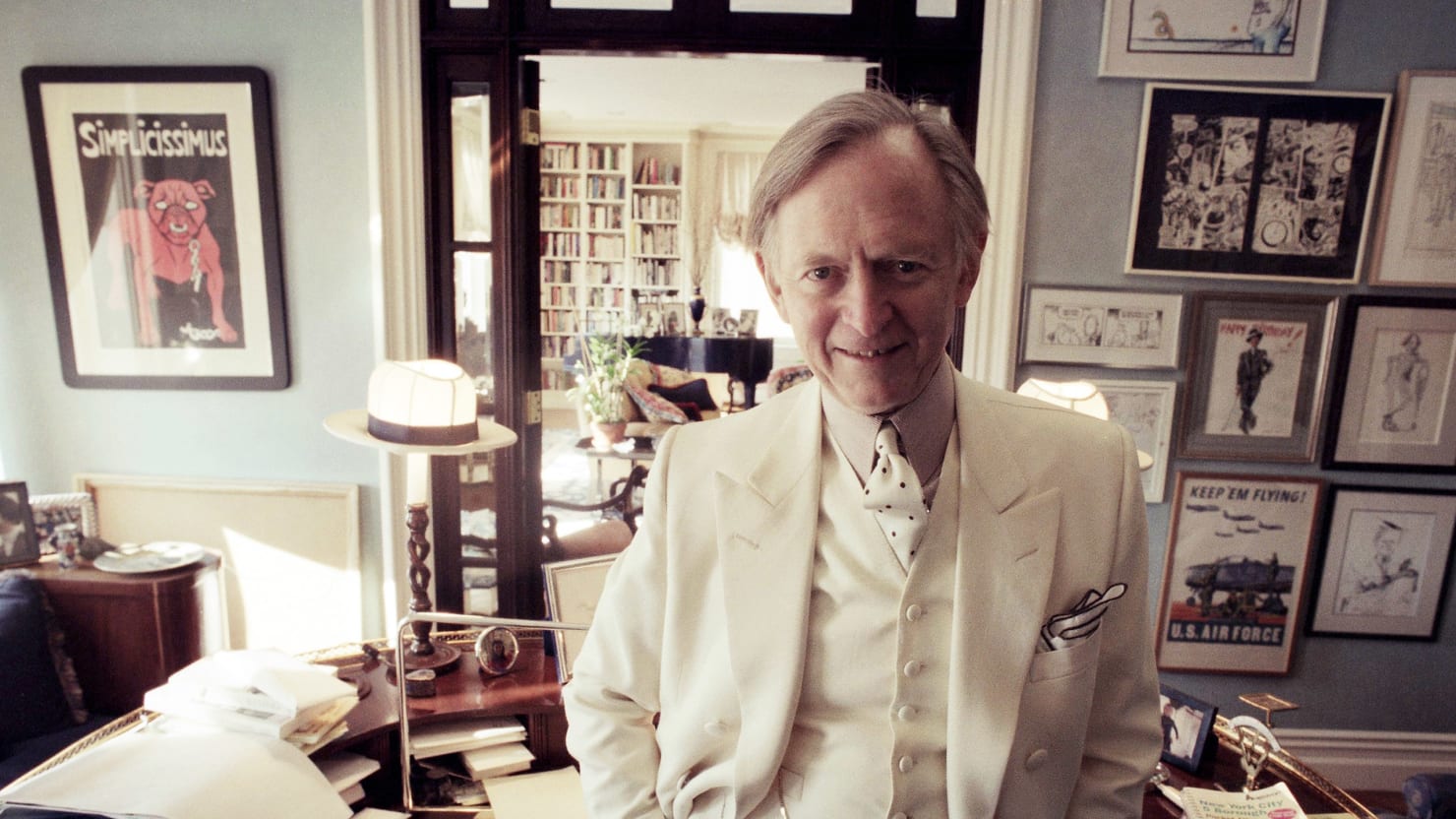
Tom Wolfe: An Appreciation


I was always a fan of what was called the "New Journalism" as practiced by Tom Wolfe and a few others.  I particularly liked his Radical Chic which so devastatingly mocked the propensity of rich, intellectually-inclined white who hosted events for such as the Black Panthers, and mocked Leonard Bernstein in particular,.  "New Journalists" as I understood them included Norman Mailer, whose Armies of the Night and Miami and the Siege of Chicago were personal favorites.  Then of course there was Hunter S. Thompson, though he I think was referred to as  Gonzo Journalist, perhaps because his new journalism was associated with the intake of drugs.

It's odd, then, that Mailer was among those who criticized Wolfe for not really being an artist or novelist, despite the fact or perhaps because he wrote so well.  John Updike was a critic as well.  I've never had enough interest in Updike to read any of his work.  Mailer interested me, though I thought his writing would become grotesque now and then, particularly when the subject being addressed was sex.

Wolfe's journalism was very good indeed.  The Painted Word and From Bauhaus to Our House are impressive.  But I find it hard to understand why his novels failed to pass muster with some; why they're considered somewhat lacking by other novelists.  I suspect, though, that this is the case merely because they tell interesting stories and tell them well, and also sell well.

Wolfe's novels are picaresque, in the sense I think that the Satyricon of Petronius Arbiter and The Golden Ass of Apuleius are as well.  They're adventures involving protagonists who are recognizable who encounter ordinary and extraordinary circumstances and react to them in ordinary and extraordinary ways.  Most of all, they're enjoyable.

It may be that art has come to mean that which cannot be enjoyed, that which is not entertaining.  Art is supposed to inspire in us some feeling which isn't associated with pleasure, being too profound.  It can be disturbing, grim.  It must cause us to think--never a pleasant experience for most of us.  It may move us to tears or anger.  It is supposed to evoke some strong emotion.

That may be so, but if so is dispiriting, I think, for the artist and those who patronize the artist or his/her work.  What we experience in life can be dreary enough.  Why seek to create dreariness, or seek out such creations, when we're exposed to it in "real life" and allow it to disturb us from moment to moment?

In dark times, entertainments are few and become coarse.  Those who can tell good stories and tell them well, with wit, imagination and intelligence, should be honored as much as any; perhaps even more.

Sunday, January 7, 2018

Alas, Alas Babylon!


One thing that can be said of the Bible is that it has provided titles to authors of books, particularly (and appropriately?) books of fiction.  The Bible is known to most of the West fairly well, as it was hammered into us by various and sundry adults we were exposed to as children.  It was the source of titles for William Faulkner,  John Steinbeck and Earnest Hemingway, and for Pat Frank who wrote a book entitled Alas, Babylon, which I read with considerable interest as a teenager.  I remember it fairly well, which is more than can be said of other books I read, whether under the compulsion of a teacher or freely.

The title of that book, and of this post, is taken from the cheery Book of Revelation, the favorite of so many of us Americans, who tend to associate Babylon, the great whore, with New York or perhaps Hollywood.  It seems likely the actual author (or authors) of the Book meant to refer to Rome, but Americans and others like to associate America or parts of it to ancient Rome or the Roman Empire, so maybe it makes no difference.

The book of Frank Pat or the Book of Revelation comes to mind as I observe the antics of our self-described stable genius and inadvertently amusing president and the ruler of North Korea as they revile one another, as Frank's novel was devoted to the describing of the results of a nuclear war on survivors in Florida.  They themselves bring to mind, to my mind at least, the Elvis Costello song Two Little Hitlers.  But comparing the president with Hitler, even to a little Hitler, is as tiresome as the president himself.

Sin and punishment of and for sin are of course the essence of the Book of Revelation and of the Bible itself.  They're also essential to any religion, and I think ethics, founded on the belief that right and wrong are determined by following or failing to follow divine commands.  Follow those commands and one acts rightly; fail to follow those commands and one acts wrongly.  As the commands are those of God, the failure to follow them must result in punishment of a particularly vicious  kind, and as what happens to wrongdoers in life is often thought to be insufficiently vicious, that punishment must come in the afterlife.  Naturally, if God decides to intervene in life, the punishment will be adequate, and in order to be adequate that punishment must be as mighty as possible, and nuclear punishment is as mighty as we can conceive at this point in our sad development.

An ethics or religion based on divine command strikes me as unsatisfactory, but I can understand the impulse to believe that our conduct presages some kind of disaster if it does not merit some kind of devastating punishment.  It's difficult not to think that bad things are bound to happen, and soon.  "Dangerous creeps are everywhere" as Warren Zevon and Hunter Thompson wrote.  We have cause to be afraid.

So it seems, in any case.  I take some comfort in the fact that it's possible we perceive ourselves to be in greater peril than in the past simply by virtue of the fact that information, good or bad, true or false, is so much more available to us than in the past, and instantaneously.  Perhaps we've always been this way and our nation and society has always been in this condition, but we were better able to cope with it, or at least ignore it, in the past merely because it wasn't there before us at all times, as it is now.

But an aspiring Stoic should be undisturbed by all of this, as it is beyond the power of our will.  Our business is to govern ourselves to do what is right, and treat what we cannot govern as indifferent.  A Stoic, and even an aspiring one, should be able to survive even our time without being disturbed.


Friday, July 29, 2016

The Kingdom of Fear

The late Hunter S. Thompson described our Great Republic as "The Kingdom of Fear" in the title of a book he wrote, and also in a song he co-wrote with the equally late Warren Zevon which appeared in his fatefully titled album My Ride's Here.  More and more, we seem to become that place.  Worse yet, perhaps, we're in active search of a King of our kingdom.

It's not the first time, I suppose.  FDR's claim we have nothing to fear but fear itself was made during a fearful time for our nation.  But the fear which now seems to define us is different from that we felt during the Great Depression.  That's my speculation, of course, and nothing more.  I didn't live through the Great Depression.  My parents did, and I know of it only through what they said and what I've read.

But I think it's reasonable to say that what we fear now is different from the fear one feels when there is no money or even food to feed ourselves or those we love.  There's no question there are things to fear now, and they are serious things.  But the fear too many of us feel is of other, different, people, and too often is of difference itself, which is to say of anything with which we're unfamiliar or uncomfortable.  And in this case our "leaders" (such as they are) unlike FDR are telling us we should be afraid; they urge us to feel fear and act on that fear.

It happens that they often do so to benefit themselves.  This is unsurprising in politicians and pundits, but contemptible nonetheless.  But it's dangerous as well because as I noted in a prior post, fear is an idiot (to quote Ambrose Bierce).  Fear, in other words, makes us stupid.

We happen to have quite a few guns here in God's favorite country.  I have a couple of "long guns" myself.   I don't carry them about with me, though I've heard of some cases where men do so, brandishing them proudly in fast food places and supermarkets.  It takes a peculiar kind of person to indulge in such displays, I believe, particularly with a rifle or shotgun.  I saw a man wearing a handgun on his hip at a restaurant not long ago. 

If I speculate why someone who isn't in law enforcement or engaged in hunting or shooting sports would carry a gun of any kind in public, and particularly in public establishments where other people eat or shop or congregate for any reason, I find it hard not to conclude that it is out of unreasonable fear, or due to the fond hope that they may use it in some manner in an heroic fashion, killing or maiming one of the many bad guys who haunt our thought and, we are being told, must defend ourselves against.  It occurs to me that people who are afraid, or looking for a chance to use a gun, are best off not carrying them around in public.  At least, others are better off if they don't. 

Fear begets a number of other unpleasant things.  It of course begets fear itself--in my case, fear of those who encourage fear among us--but also hate, anger and generally a thoughtless response to circumstances.  This was of course a fairly common subject of episodes of The Twilight Zone.  Rod Serling taught us nothing, it seems.  Was Serling's time more like ours than the time of the Great Depression?  The Communist scare may be comparable.  We were afraid of commies lurking unknown among us.  But now those who should frighten us according to those who delight in telling us what to do and think are identified more easily.

It's difficult to see fear in others, except when we're face to face.  It's easier, though, to see hate and anger and conduct caused by fear.  Unfortunately, we see these things more and more, if not on our TVs, smart phones, tablets and other devices then in our daily lives.  We're all angry at something as far as I can tell, and our anger is in front of us, and related by us to others, thanks to our technology, front and center 24/7 as we've been taught to say.  The Republican National Convention, sadly, was a kind of celebration of fear and its effects, a festival of it in fact.  We'll see more as this agonizing, endless presidential campaign winds down.

Fear may motivate us to address our problems but it is useless and even destructive in solving them.  The Kingdom of Fear will be brutish, intolerant, quick to react to any slight, real or imagined, but also cautious in the extreme when it comes to change of any kind and the unfamiliar.  It will seek scapegoats.  It will shut its gates.  It will be an unhappy place, filled with people who will find no comfort, being fearful.  There are those who long for this kingdom.  "Dangerous creeps are everywhere" according to the lyrics of the song Thompson and Zevon wrote.  They were right.

Thursday, June 4, 2015

The Continuing Vulgarization of Conservatism

One of the many aspects of our times, and our country, which sadden me is the deterioration of a once reasonable political, social and cultural perspective--conservatism--into a contemptible, irrational, self-righteous, dull, bigoted, totalitarian and often preposterous ideology, worthy of Jonathan Swift's Yahoos or members of the Know-Nothing Party.

I say "reasonable" as opposed to, say, "admirable" because I think reasonableness is the best we can expect in matters involving politics (and perhaps in anything we humans do).  Even when it was respectable (which stopped being the case not all that long ago) conservatism had its share of loonies and stout defenders of the primitive and immoral.   The normally shrewd and thoughtful Edmund Burke, a great figure in conservatism, wrote, infamously, an extremely silly kind of Romantic rhapsody regarding Marie Antoinette in his work regarding the French Revolution.  John Calhoun, who seems to have had a sharp intellect, unfortunately devoted it to rigorously defending the institution of slavery.  But much the same may be said of liberalism and its devotees.

Conservatism once stood for limited government to facilitate the exercise of individual rights.  This position requires a commitment to laws which protect individuals from the limitation of rights arising from government power and authority, which in turn requires a commitment to the rule of law.  A commitment to the rule of law requires that the law be deemed to apply in all cases, subject only to reasonable exceptions, the purpose of which is not to restrict liberty but to foster it.

Conservatives in this country continue to pay lip-service to these ideals, but are ready and in some cases eager to disregard them.  That's because they take the position that they know what's best for everyone and the country, and seek to use the law and government power to impose what they know is best, whether other citizens agree that is the case or not.  It is, after all, for their own good or if not for their own good than it's for the good of anyone who matters.

This is of course reflective of the same kind of arrogance and totalitarian thinking conservatives once maintained were characteristic of liberals and liberalism.  This repressive stance may explain why many now prefer to identify themselves as libertarians or "independents" rather than conservatives.

An acquaintance of mine who is conservative recently responded to my complaints about conservatism by stating that the view that individuals should be free to do what they want provided they don't harm others was all very well and good when there was a consensus regarding what was appropriate conduct and thought, but that's no longer the case.  So, presumably, individuals should no longer be free to do and think what they like.  It's a telling statement, one that indicates that concerns with individual liberty are not all that concerning, to conservatives.  What is significant is conformity to certain standards.

As may be guessed, given the timing of this post, it was made in connection with the Jenner situation.  We Americans have always been unduly fascinated by sex, of course, as well as gender, or what may more properly be called how we perceive and broadcast our gender and that of others.  In this case we have someone who is or wants to be a woman seemingly eager to relate that to the world at large, thereby assuring an adverse reaction from those who are disturbed by it which has also been related to the world at large.  I care nothing about sex between, to use a cliche, consenting adults, and think it should not be of any concern to others, but think those who try to make it our business one way or another are wrong to do so.

In other words, I have no desire to hear of it.  It may be that Jenner has sought this publicity, in which case an adverse reaction should have been expected.  I assume yet another "reality show" will soon appear.  But the adverse reaction is nonetheless founded on a belief that something is permissible and other things impermissible, and this is a belief today's conservatives take with increasing frequency; worse yet, they seem inclined to use the law and government power to eradicate what they consider impermissible.

Conservatives seem particularly inclined at this time to adopt laws or interpret or apply laws in such a manner as to prevent, or limit, the conduct of those who don't think as they do, and to preclude even the presence of those different from them in the United States.  The U.S. is very much a product of the Enlightenment; it's Constitution is very much the product of Enlightenment thinkers.  Yet it is insisted it is a "Christian nation" which is to attribute a certain religion to the nation contrary to the Constitution and the writings of the Founding Fathers.  It is a nation of immigrants not only because its laws allowed immigration, but because it accorded to immigrants the same rights accorded to other citizens.  Conservatives seem less and less inclined to allow immigration and to allow others to seek let alone possess the benefits of citizenship.

Conservatives have begun to favor certain rights over others.  The fetishistic regard for the Second Amendment, uber alles as it were, is a symptom of this rejection of the rule of law, as is the growing tendency not to take a neutral stance as to religion but to favor religious beliefs and conduct (but only Christian in nature) in legal situations.  Zoning decisions are now subject to strict scrutiny if they involve religious uses.  The use of the law to provide for the teaching of religious beliefs in the form of creationism is another example of the new conservative urge to legislate in such a manner as to assure that what they think appropriate is taught.

In short, conservatism as a political and cultural force has become a threat to individual liberty.  Conservatives want us to be free to do as we please provided we do as they please.  They don't want us to do otherwise, and actively seek to prevent us from doing so. 

It's natural to wonder how far this perversion of traditional conservatism, which has its basis in classical liberalism, will go.  Ultimately, I think, what is now called conservatism has its basis in fear (and loathing, I suppose, as the late Hunter Thompson would day).  Fear of change, of most everything that is different.  It's likely that change will come regardless of efforts to prevent it from taking place, because to put it simply and frankly, people die.  It seems most who call themselves conservatives are older, and overwhelming white.  The demographics of this country are changing, and the older of us generally die before the younger do. 

Monday, August 12, 2013

The Kingdom of Fear

These words were used to describe these United States by the late and remarkable if not always great Hunter S. Thompson before his suicide, and were also used in a song he co-wrote with the late, great Warren Zevon.  I hesitate to call Thompson "great" without qualification because of the manner of his death; not necessarily because he took his own life but given the way he went about doing so.  As I recall, he shot himself while on the telephone with his wife and while his son was at home in another part of the house.  Exiting the kingdom in this fashion seems intended to cause the greatest possible harm to those who are close to you.  That may or may not have been his intent, but regardless of whether that was the case it is not an honorable departure.

But I can't help but think that the description is apt.  We are fearful of many things and that would seem to be a prerequisite of living in the Kingdom of Fear.  That is, apparently, also why we have so many guns and indeed should have them according to the gun shills; and we should also fear, of course, as others with guns may try to kill us or those we love or, worse yet, may try to take away the guns we require in order to prevent them from killing us or taking away our guns.  It is all a part of the great Circle of Strife.

There are certainly things to be feared, and perhaps more people to be feared than there were to be feared in the past.  As Thompson and Zevon put it in their song, "dangerous creeps are everywhere."  But one must wonder if this is indeed the case.  As we all know what transpires around the world with great rapidity, and as our government, ostensibly in charge of the Kingdom of Fear, knows what we know and do and say and write, it may be the case that we believe there is more danger simply because we have access to more information than we did.  Dangerous creeps may be more evident than they were not because there are more of them, proportionately, but because we can no longer be ignorant of them.  We can see them or hear of them or read of them 24/7 (a clumsy but useful little summary phrase).  Indeed, our knowledge of them is in a sense compulsory; we would have to be in a wilderness without TVs, radios, smart phones to enjoy the bliss of ignorance.

Perhaps also the dangerous creeps among us have more opportunity to display and indulge in their infinitely varied creepiness than in the past.  The Internet is a wonderful tool, but it is as well an outlet for all that is good and bad in us, and the bad, sadly, exceeds the good, or at least is more easily expressed than the good in the available format.

We've always been subject to fears and it seems are inclined to be overwhelmed by fear.  This inclines me, not entirely fearfully but perhaps warily, to wonder whether our interesting times have made us ripe for another of the periodic religious "awakenings" which occur now and then in our history.  Such things can have profound effects, not all of them good.

Religion is not really the opium of the people as Marx claimed; at least not religion as it develops in ages of anxiety like ours.  Opium may dampen fear, and religion can as well, but true comfort can only be obtained by certainty and certainty through religion is a product of righteousness.  If religion can be compared to a drug due to its use in confronting fear, it's more like cocaine.  It arouses, it is active.  It's certainty provides comfort in the form of euphoria, a kind of ecstatic absoluteness.  But certainty can degenerate into intolerance and paranoia.

Now it seems existent religions don't provide the kind of certainty required to quiet fear.  But that may change, and perhaps is changing as the religious become more emotive, simple, unquestioning in their beliefs.  The times demand action, we feel, and action is most satisfying when it is unthinking, and certainty becomes uncertain when subject to critical thought.  And so in the Kingdom of Fear we abstain from critical thought, the better to be certain.