Showing posts with label William Faulkner. Show all posts

Wednesday, August 25, 2021

Islands in the Stream of Consciousness


Let me first give credit to the person who coined the phrase used as the title to this post, Jim Reich.  He was a good friend, now dead. It combines the title of Hemingway's Islands in the Stream and a literary technique well known and practiced with some frequency in the first half of the twentieth century and even now.  Knowing him as I did, I don't think he was referring to the Dolly Parton/Kenny Rodgers duet.

Stream of Consciousness is a literary device, but the phrase, or something like it, was used by the psychologist-philosopher William James in this Principles of Psychology to describe states of consciousness, or thoughts or ideas, as being a process, a flow, rather than isolated and distinct from one another.  Efforts were made by certain authors to replicate this flow in their poetry and novels.  Famous practitioners were James Joyce, William Faulkner, Jack Kerouac, Virginia Woolf and others.

I doubt that the literary technique is or can be anything like the process or flow conceived of by James, however.  The fact that it's employed for a purpose--that it is indeed a technique, a contrivance--renders this impossible.  What James and others (like John Dewey) point out is that typically our states of mind or consciousness are non-reflective.  In other words, we don't constantly think; we don't consider means and ends, we don't anticipate events or consequences.  In fact, we seldom do.  We think when we have to do so, or are induced to think by encountering a situation we find problematic or dissatisfying in some sense.  Then, we seek to resolve it.  For the most part, we merely feel, or react thoughtlessly, as a "habit" to use Dewey's terminology.

Stream of consciousness writing is deliberate, and requires thought.  Through thinking, the practitioners of Stream of Consciousness writing attempt to imitate that which isn't thought.

It doesn't work.  If you read examples of it you may find on the internet, I think you'll agree with me.  What you'll see, I believe, is an effort to express thoughts or feelings in an unconventional manner, sometimes disjointed, sometimes juxtaposition is unexpected, sometimes surprising but not as a stream or flow.  In fact, the thoughts, feelings, ideas presented using the Stream of Consciousness technique are staccato.

How could they not be?  It's a limitation imposed by language itself, I think.  Even shorn of such words as pronouns, the description of walking in the woods would be something like:  Walking, exercise, wood smell, sunny, feeling fit, warm, getting tired, etc.  The description is necessarily made up of separate items, independent of one another.

Words, books, poetry, fiction and non-fiction prose aren't part of James' stream of consciousness, because they're read.  A book or books might be when we merely see or encounter them, but reading and understanding them are not. 

It's true that they may serve to evoke a feeling, however.  But that feeling, having been evoked by the effort of reading and comprehending, isn't part of the stream.  Like reading itself, like thinking, like acting for a purpose, they can be thought of as islands in the stream of consciousness as my old friend put it.  They break up the stream, they divert it, for a time.  Then, we get back to simply existing.

Because writing supposed to reflect a Stream of Consciousness clearly does no such thing (or so I think) I wonder whether such writing was more a fad than anything else.  Perhaps Gertrude Stein was reading James on psychology on day and was struck by the idea, and passed it on to her acolytes, who passed it on in turn.  E.E. Cummings is said to be a poet who used the technique.  If so, his poems always strike me as disjointed, deliberately so--staccato, in fact--and perhaps that can be said to prove my point.  His poems have impact, but they can hardly be said to flow.  They don't flow, they jerk from point to point.  It seems odd to me that any writer would think that they were accurately portraying the way our consciousness works using this device.

Ultimately, perhaps, reading prompts us to decide what kind of island in the Stream of Consciousness writing we want to live on or explore, for a time.  The part of the writer is to make the island worth exploring.  What is worth exploring will vary from person to person and time to time, of course, but that's the way of real islands as well.


 

Monday, May 7, 2018

Homage to W. Somerset Maugham


I wonder whether an artist of any kind can be said to long for success.  Success is something it would seem great artists would wish to avoid, as their greatness to many is defined--if not measured--at least in part by their lack of success.  Great artists are not successful; their work isn't admired during their lifetimes, or sought, and most of all not bought.  This appears to be a condition precedent to greatness in an artist.

I refer to artists of all kinds, to painters, writers, composers, musicians.  The quality of art is thought to increase with failure in life.  Those unfortunate artists who succeed must do so because they appeal to those having money and willing to spend it, i.e. to Philistines.  Philistines necessarily are without the ability to discern great art and are instead attracted to the banal, the clichéd, the sentimental and, worse yet, the bourgeois.

So at least is the conceit of many an unsuccessful artist, I would guess, and of those who discover them after they've suffered through life in poverty or enslaved by drugs or as misunderstood genius-deviants-criminals.  It's curious that the tortured artist has become something of a cliché.  Perhaps the successful artist will come to be lauded and his/her work sought after, and will even be considered great when the artist has passed beyond the allure of genius.  There are examples in history.  Michelangelo, painter and sculptor, who seems at times to have thought of men and God as being as preposterously muscled as modern superheroes, was a successful artist of his time and is nonetheless considered a great one.

W. Somerset Maugham became extremely successful as a novelist, playwright and writer of short stories.  He was a screenwriter too, I suppose.  At least, several of his books were made into movies.  He was also a success as a public figure, that figure being himself as a well-read, knowledgeable, witty and world-weary literary master, of sorts.

Of sorts, I say.  He hasn't been granted iconic status, and has been considered less a writer than the other standouts of the 20th century, such as his contemporaries Hemingway, Faulkner, Joyce, Scott Fitzgerald.  Even Anthony Burgess, who apparently admired his work, poked fun at him in his Earthly Powers.  Maugham himself pretended (or perhaps even felt) modesty about his work, declaring himself to be in the first rank of second rank writers, or words to that effect.  Orwell thought well of him and admired his storytelling and simplicity of style.

So do I.  Perhaps he was a good storyteller because he was very well-traveled as well as well-read, listened and observed.  He experienced much, and was even for a time with British intelligence, working in Switzerland and Russia after the downfall of the Czar but before the Bolshevik revolution.
He wrote a series of stories about being a spy, naming the protagonist Ashenden.  Supposedly, Ian Fleming was inspired by his work to write his James Bond stories.

He has never been considered a great writer.  I'm sure there's a reason why that's the case.  But I re-read recently his novel The Moon and Sixpence and found myself impressed by the story told if not by the writing.  His style of narration is cool, dry and simple, which I find admirable, but the story is a good one as well, although it grows tedious sometimes as he describes the life of an artist apparently based on Gaugin, as related by those who encountered him.  What makes the artist remarkable is the fact that he is what would now be called a sociopath or one with a similar personality disorder.  He's entirely indifferent to other people, without conscience, interested only in painting.  He destroys lives, without any real intent to do so but for merely selfish reasons and is untouched by consequences to others.

Of course, his art isn't appreciated during his life, but he's considered a genius after his death.  He destroys his greatest work, apparently content to have done it but not wanting it to be seen by others.  I wonder if Maugham was having a bit of fun with the idea of what it means to be a great artist, portraying him as a kind of seductive monster, as inhuman, and telling his reader that he's happy not to be a great artist himself, and the reader should be happy for it as well.  Telling his reader that great artists are not admirable, but merely sick.  They're not content to be tortured themselves by life, but wish also to torture those they know.  Perhaps one doesn't have to be tortured to be a great artist.  Instead, one must torture.

I think of Maugham as being similar to Graham Greene.  They have the same interest in far away places and in the grotesque aspects of human nature.  They both tell a good story.  Somehow it's enough, for me.  To what extent is it reasonable to expect more?  Why be disappointed if an interesting story is told and told well? 

Maugham put a symbol on all his books, and that's what is shown above.  It's supposed to be of Moorish origin, a charm against the evil eye and talisman of good luck.  It brought him luck.  I know nothing of the evil eye.


Sunday, January 7, 2018

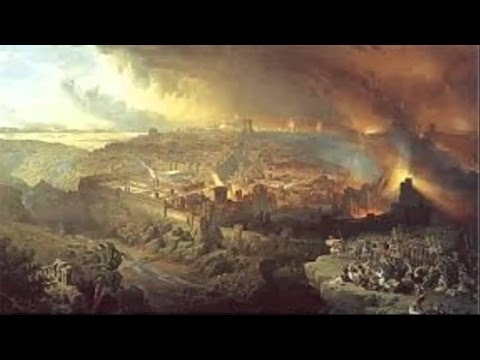
Alas, Alas Babylon!


One thing that can be said of the Bible is that it has provided titles to authors of books, particularly (and appropriately?) books of fiction.  The Bible is known to most of the West fairly well, as it was hammered into us by various and sundry adults we were exposed to as children.  It was the source of titles for William Faulkner,  John Steinbeck and Earnest Hemingway, and for Pat Frank who wrote a book entitled Alas, Babylon, which I read with considerable interest as a teenager.  I remember it fairly well, which is more than can be said of other books I read, whether under the compulsion of a teacher or freely.

The title of that book, and of this post, is taken from the cheery Book of Revelation, the favorite of so many of us Americans, who tend to associate Babylon, the great whore, with New York or perhaps Hollywood.  It seems likely the actual author (or authors) of the Book meant to refer to Rome, but Americans and others like to associate America or parts of it to ancient Rome or the Roman Empire, so maybe it makes no difference.

The book of Frank Pat or the Book of Revelation comes to mind as I observe the antics of our self-described stable genius and inadvertently amusing president and the ruler of North Korea as they revile one another, as Frank's novel was devoted to the describing of the results of a nuclear war on survivors in Florida.  They themselves bring to mind, to my mind at least, the Elvis Costello song Two Little Hitlers.  But comparing the president with Hitler, even to a little Hitler, is as tiresome as the president himself.

Sin and punishment of and for sin are of course the essence of the Book of Revelation and of the Bible itself.  They're also essential to any religion, and I think ethics, founded on the belief that right and wrong are determined by following or failing to follow divine commands.  Follow those commands and one acts rightly; fail to follow those commands and one acts wrongly.  As the commands are those of God, the failure to follow them must result in punishment of a particularly vicious  kind, and as what happens to wrongdoers in life is often thought to be insufficiently vicious, that punishment must come in the afterlife.  Naturally, if God decides to intervene in life, the punishment will be adequate, and in order to be adequate that punishment must be as mighty as possible, and nuclear punishment is as mighty as we can conceive at this point in our sad development.

An ethics or religion based on divine command strikes me as unsatisfactory, but I can understand the impulse to believe that our conduct presages some kind of disaster if it does not merit some kind of devastating punishment.  It's difficult not to think that bad things are bound to happen, and soon.  "Dangerous creeps are everywhere" as Warren Zevon and Hunter Thompson wrote.  We have cause to be afraid.

So it seems, in any case.  I take some comfort in the fact that it's possible we perceive ourselves to be in greater peril than in the past simply by virtue of the fact that information, good or bad, true or false, is so much more available to us than in the past, and instantaneously.  Perhaps we've always been this way and our nation and society has always been in this condition, but we were better able to cope with it, or at least ignore it, in the past merely because it wasn't there before us at all times, as it is now.

But an aspiring Stoic should be undisturbed by all of this, as it is beyond the power of our will.  Our business is to govern ourselves to do what is right, and treat what we cannot govern as indifferent.  A Stoic, and even an aspiring one, should be able to survive even our time without being disturbed.