Showing posts with label Time. Show all posts

Wednesday, December 12, 2018

The Unending Past


It occurs to me that the past is never past.  Not, at least, in the sense that it ends, or is done.  The past is ever growing.  It is never over, never finished, and becomes larger--and more imposing--with each moment.

We may of course, if we wish, distinguish it from the present.  What we experience, think, feel and do now isn't part of the past, but will be in an instant.  Like all else that we experience, think, feel and do, then it will be beyond us and unalterable.  We may do now things which will alter or correct the consequences of what took place in the past, but what happened has happened and cannot be changed.

This is a misfortune.  What we are is necessarily due to the past, what we will be and what we will do is necessarily formed by the past.  We're entrapped by it, to a certain extent at least.  We're slaves to the past.  More often than not, we'd like to change it, and are barred from doing so by time's arrow.

The past is what we regret; it is all that we regret, obviously.  We're unable to regret what hasn't taken place.  As we're constantly reminded of the past, by people who speak of it or by places where something occurred, regret is a part of our lives unless we've done nothing to regret, ever.  No human being can make that claim, unless delusional.

Even if we're not reminded in waking life, though, it lurks within us and is resurrected in a peculiar way in dreams.  Just last night I dreamt of something I regret, something which took place long ago, something which I regret so profoundly that it appears in dreams in some form or other, not frequently but all too often, and I regret it all over again; regret it as I did when I first learned of it.  I say "in one form or other" because the dreams aren't reenactments of what I regret, but odd vignettes, pictures or dream-events which derive from the regret.

It was something I wanted to take place and did not.  As a result, something else took place.

It's hard to conceive of anything more futile than regret, or explain the pain of dreams that provoke it and bring to a kind of half-life that which is regretted.  But such is the nature of the past that dreams can't be avoided,  Also, that which is now isn't what would have been, and the contrast is impossible to ignore, so waking life will also bring regret if we let it.

The unchangeable past is clearly beyond our control.  An aspiring Stoic, therefore, should be indifferent to it and not allow it to disturb him.  But the past is unending, and grows for each of us as we age.  The past is the most formidable obstacle to our tranquility.  It doesn't altogether help to understand it isn't something within our power, however, because we forever wish that it was, and can't prevent it from haunting us in our dreams.


Sunday, July 2, 2017

Failing Hands


In the past month or so, I've fallen three times.  For no good reason.  That's not to say there's ever a good reason for falling, although I suppose that if it's in the course of ducking a projectile of some kind, that would be one.

The falls weren't debilitating, though the last two may be attributed to a debilitation in the thigh or knee resulting from the first.  They nonetheless serve to remind me of age and aging and, most uncomfortably, of my age and the all-too undeniable fact that I'm aging.

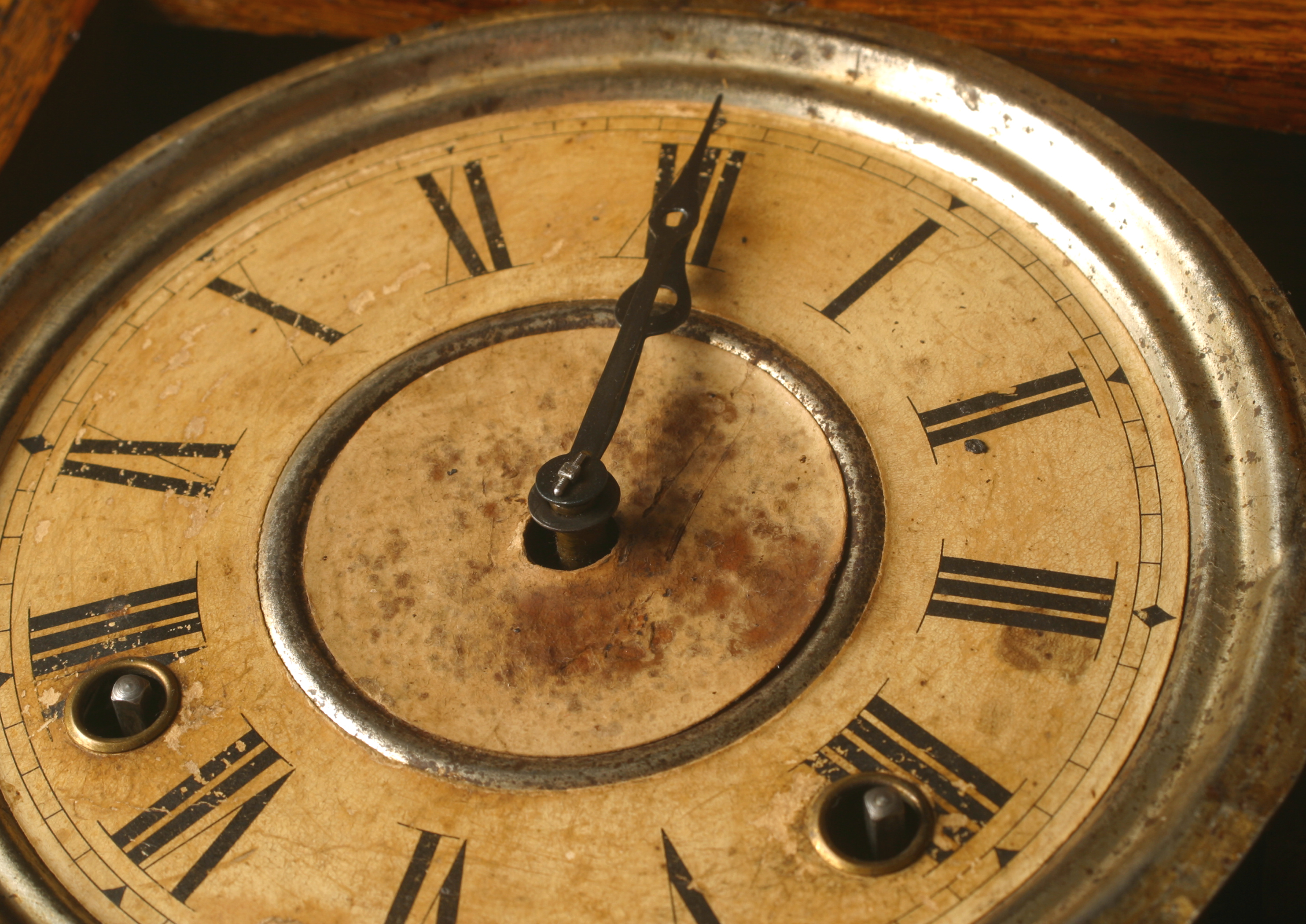
The "failing hands" referred to in the title to this post are those of the dead, said (somewhat unreasonably) by the poet who wrote In Flanders Field to throw the torch, meant to represent their quarrel with the foe, to those others who will replace them in the fight.  I venture to say that the dead have no hands, and that if they can be said to have them they are not failing but have failed entirely.  "Failing" is nevertheless something age can cause hands, and other parts of the body, to do, and "hands" may mean the hands of a clock as well as those of a man, and a clock measures time as it passes and as time passes we age. 

Aging is a curious thing.  It's association with time in the form of clocks is interesting and suggestive.  Clocks run down, and so do we.  Time passes, and we, eventually, pass away.  Why do we age, with time?  Why does age bring with it the successive decrease of strength and vitality and the increase in weakness and vulnerability?  Time's arrow wounds us and that wound is ultimately fatal.

It's disturbing and has disturbed many throughout--yes, I'm afraid--time.  Some it disturbs mightily.  Hemingway, it seems, despaired of life in part because he was unable to enjoy what he felt was good in it.  In his case that apparently included the ritualistic killing of bulls and causing the deaths of various fish and animals.  Be that as it may, though, he could no longer take his part in what was good as he had in the past and this exacerbated his depression and alcoholism and the possible bipolar disorder which ran in his family.

Others have even rejoiced in it, though.  At least, they've purported to do so.  Those have typically been convinced that life is bad in some sense, or a mere sojourn; a temporary and painful journey required for entry into a sublime state beyond the body.  Yeats compared an old man to a tattered coat on a stick, claiming by implication that is all an old man is, unless "soul claps it hands and sings and louder sings, for every tatter in its mortal dress."  I quote that from memory and may be wrong, but it's a wonderful line in a wonderful poem, and seems apt for those who think of life as, ultimately, a burden.

According to Epictetus, we are little souls carrying around corpses.  Another striking phrase.  Stoics as well as some Christians, and others, have thought that our lives as mortals are insignificant in the end.  This makes sense as the Stoics thought that what was divine in us is not our bodies, but the soul which partakes in the divine and is a part of it.  However, the Stoics could not hate the body or our lives as I think Christian zealots did and still do.  The divine was a part of the universe to them, a part of all that lives in the universe as well.  When the body dies and dissolves, that which is divine in us remains as part of the living universe.

What is simply is.  We age, and as Epictetus also said we should do at all times, we continue to do the best that we can with what is in our power and take the rest of what time and age bring as it happens.


Tuesday, January 3, 2017

The Pertinence Maxim: A Matter of Time

While I was attending college, a new professor appeared on campus.  Although it was, and still is so far as I know, a small liberal arts college, that in itself wasn't extraordinary or significant.  Professors would appear now and then and some would leave after a time; some would not.  What was unusual in the case I recall here was that this particular professor was said to be a sociologist.  He was the first of his kind at my college.  At least, he was the first to be called a sociologist.

As a professor of philosophy I admired and respected thought him to be worthy, I signed up for one of his classes.  The class in question addressed Time.  If I remember correctly, the first thing we students were asked to do was submit a paper describing what we felt Time to be.  I think I wrote something to the effect that time was a concept by which we determined when certain events took place or should take place (planting crops, for example).  I thought, in other words, that we came to keep time because it was useful to do so for various purposes, especially as our societies became larger and more complex.  This I suppose was a kind of anthropological view.  Time was a method used in determining and defining what takes place or should take place.  Such was, and is, my guess, in any case.  But in all honesty I'm not sure just what I thought.  That was a long time ago. 

I confess I thought my view of Time to be superior to the views of others in the class who relied on Simon and Garfunkel (Hazy Shade of Winter) and others to arrive at a definition.  The professor, though, treated our views as equally deficient and dismissed them all in a rather cursory manner.  To this day I have no idea what he thought was the correct definition of "Time."  I know only he was almost contemptuous of what we thought ("Ah yes, this is the so-and-so. view of Time").  He may have declined to give us a definition.  He was one of those professors who thought that teaching consists of asking, not answering, questions.  I encountered a few like-minded professors in law school.  It may be there is or was a widespread belief that this style of teaching is the fabled Socratic Method.  I find it hard to believe that anyone who actually reads Plato can come to such a conclusion, as I think he carefully prepared his dialogues so that they would inevitably result in a position he thought appropriate through the device of questions; much as a lawyer prepares questions to put to a witness.

It happens that Time is a subject of philosophical analysis.  There are philosophers of Time and so must be a Philosophy of Time.  The ontological status of time is studied and debated.  Philosophers discuss the difference between the past, the present and the future.  They consider why Time seems to us to be an arrow.  They wonder whether there truly is anything but the present.  They wonder about fatalism.  They ask why Time seems to move swiftly in some cases or to certain people.

For my part, I wonder as I do in most cases whether these wonderings make any difference to how we live our lives, and am inclined to say they make no difference whatsoever.  Also for my part, I feel that if they make no such difference, debating them is futile.  This may well be a fault of mine.  There may be something lacking in me.

Perhaps the professor of sociology I encountered (or did I? It was in the past!) would have though that C.S. Peirce's pragmatic maxim would be of some assistance in defining Time; more assistance, even, than Paul Simon's lyrics.  It's hard to say.  The maxim has appeared in different forms, but I'll make reference to the form in which it appeared in Peirce's essay entitled How to Make Our Ideas Clear: 

"Consider what effects, that might conceivably have practical bearings, we conceive the object of our conception to have. Then, our conception of these effects is the whole of our conception of the object."

I can't remember whether I knew of this maxim when I studied under the eminent sociologist, but would have recourse to it now if recourse was required.  Happily, it isn't.  But I think the maxim would indicate that our conception of Time would be one which is made up of the uses to which we put that concept in doing things we do, e.g. eating, sleeping, working, taking vacations, parking cars, etc. 

I find myself baffled if I seek to define Time or even think of it in any other way.  Baffled, I say, in finding any reason to do so.  Clearly, we say there is a difference between what has happened and what is happening, and in identifying such things the concept of Time can be useful.  Should we say that there is such a difference?  Why not?  How do we err if we do?  Should we say there is no past?  Why? 

Won't we keep on living as we do, using Time, making Time, regardless of the ontological status of Time?   Won't we continue to distinguish past, present and future regardless of the differences there may be between them?  It seems we understand the differences between them well enough, and those differences hardly seem surprising or worthy of analysis.  Will we ever, seriously, claim that nothing happened in the past, that there will be no future?  Do we ever make the distinctions philosophers make or reach the conclusions they do as to Time while living our lives?  If we don't, doesn't that tell us something significant about the Philosophy of Time?

Perhaps another maxim along the lines of the pragmatic maxim would be useful.  Something like this:  "Consider what effects, that might conceivably have practical bearings, which may result from our study of the subject in question.  If there are no such effects, then our study serves no purpose."  Let's call it "the pertinence maxim." [Copyright Ciceronianus, 2017.]

It may be that there are aspects of Time that may usefully be subject to scientific study, e.g. the reasons why we perceive times' passage in different ways in different circumstances.  Of course, Time has also been a subject of study in physics.  It seems to me, though, that this kind of study is one best pursued by scientists, not by philosophers.


Wednesday, November 11, 2015

Tempus Fugit

The title to this post is also that of one of my favorite Miles Davis tunes.  It means, of course, "time flies" but may have been derived from a line in Virgil's Georgics--Fugit Irreparabile Tempus.  That line has a darker meaning.  Time passes swiftly, and once it passes, is irretrievable.

The past is the great and inaccessible storehouse of our lives, and contains all our mistakes, our achievements, our actions, thoughts, and too often loved ones and friends.  It is the quintessential thing not in our control; there's nothing we can do about it.  Yet it haunts us, rides us like a hag.  It also, though, has made us what we are.  If we can control ourselves, why can't we control our past?

Well, because it's not here, though we are.  What we may say, employing metaphor, "made us" need not be here with us.  We remember the past; we don't possess it.  Remembering the past doesn't consist of living the past.  We did that already.  We can, in a sense, repeat the past, which is merely to say make mistakes we made before.

Just what the past consists of is, like so much else it seems is apparent, a subject of philosophical debate.  I doubt if it can be intelligently claimed to be anything but things that happened.  Nobody thinks the past is taking place now; nobody confuses it with what takes place now.  There seems little need to debate this, but it has been made a subject of debate.  The past isn't the books, films, sounds about the past we read, see and hear.  Again, this is an obvious conclusion.  We know the past can be misrepresented.  So can what takes place now.  There is no reason to believe the past is or is not exactly what common sense indicates is the case.  For some, of course, this only makes it a more attractive subject for consideration, common sense being prima facie deficient to certain of us.

The past is a concept regarding which I think it would be useful to apply the pragmatic maxim:  "Consider what effects, that might conceivably have practical bearings, we conceive the object of our conception to have. Then, our conception of these effects is the whole of our conception of the object."

Peirce, the maker of the maxim, seems to have reconsidered it over time, and there have been those who have different ways of looking at it just as Wallace Stevens noted we may have thirteen ways of looking at a blackbird.  But it appears to me that Peirce thought of it most consistently as a method by which to make ideas clear; particularly ideas that are bandied about in philosophy.

The "past" has practical bearings to the extent it is thought of, studied, used by us, here and now.  There are various ways in which it can have practical bearings, on us and on others and on the rest of our world, which is to say that it has consequences.  There is no need that it be defined any further than that requires.  To the extent we define it otherwise, we're engaged in flights of fancy.  Such flights of fancy usually involve our tendency to think in terms of things.  Thinking of the past as a thing naturally leads one to treat it as a thing, an object regarding which we speak.

What has practical bearings is not the thing which is past, it's what happened in the past and its effects we encounter today. 

We need no flights of fancy in order to acknowledge the significance of the past.  The past is hugely significant, as it effects how we think, feel and act.  Our past, though, is in particular irretrievable and because it necessarily involves things we did or did not do, those we knew but no longer see, it is inevitably a source of regret though it may also, sometimes, be a source of be a source of fondness.  There are good memories as well as bad.  But we humans tend to do or not do more that we regret than we are proud of, and when we regret what we did or did not do that regret arises from our sense of responsibility.

What's done cannot be undone.  This is the tragedy of the time-bound.  We can't avoid the mistakes we've already made and the consequences of those mistakes can only, at best, be mitigated. 

Sunday, June 3, 2012

Time Out of Mind

According to Cicero, "there is nothing so absurd but some philosopher has said it."  I'm not sure just what it was that prompted this comment.  I like to think that there are limits to absurdity, or at least limits to the deliberate promulgation of absurdities as fact, but I confess I'm given to wonder now and then.

Consider, though:  there are, or apparently were, philosophers who are or were unconvinced of the existence of an "external world" independent from our minds (dealt with in prior posts) or perhaps more properly that its existence cannot not be demonstrated to their (and therefore appropriate) satisfaction, and that mind and body are in some sense separate, and that Forms of absolute, perfect reality exist regarding which that which we experience is but a poor facsimile, and that we can't know just what "things in themselves" (like, for example, the computer on which I'm typing at this moment) really are; so, perhaps Cicero was right. 

I'm doing some reading at the moment regarding the question whether the past is real.   Some philosophers feel it isn't.  Some, unsurprisingly, think it is.  Most of us common folk, I think, would  maintain that it was, but is not now.  Most of us would probably assert that in the past, Roman legions marched around Europe, dinosaurs walked the earth, galleys manned by slaves were used for ocean transport.  However, that is no longer the case.  So, Roman legions, dinosaurs and such galleys certainly were real, but as they no longer exist, they can't be said to be real now.

A philosopher may be inclined to say, however, that we have no business referring to the past as real in any sense if it no longer exists, or that we can't state anything regarding what happened in the past, past events, past people, without purporting to come to conclusions regarding that which does not exist, which we cannot do legitimately.  How can we rely on our memories, or even records of the past?  There is no way to verify them, properly.

Some might question this kind of view, though.  There is now evidence that certain animals existed which no longer exist.  There are buildings we see which must somehow have come into existence, unless we're satisfied in thinking that they suddenly appear at the time we first encounter them.  There are people we knew who are no longer present.  Isn't it reasonable to infer from such evidence that there was or were some animals, things, people but now there are not?

Time is I think a particularly difficult subject for philosophers to analyze and explicate now, because physics has significantly preempted the field, or at least complicated it.  In the realm of physics, there be dragons I certainly cannot slay, in any event.  Physics may eventually ascertain that the past continues to exist in some sense, or can be retrieved, or perhaps indicate that there is a possibility of time travel to the past (if it has not already done so).  However, until that occurs, just what can be said about the past?  What is it?

In answering that question, I'd be inclined to apply some variant of Peirce's pragmatic maxim (he formulated several versions of it).  This would entail defining it by reference to its practical consequences.  The past is something that we recall, sometimes with pleasure, sometimes sadly.  It thereby and in other ways can effect us and our dispositions and our lives.  It can be used as a reference.  We can make decisions regarding what is transpiring now based on what has taken place in the past.  The world we interact it was in many respects shaped by the past; is a result of the past, and knowing the past can help us understand the world, ourselves and our fellow participants in the world.

The past is clearly something we think about, and something that influences us and how we live and act now.  In that sense, it is clearly real now, i.e. it is a part of our world, our reality.  Isn't that sufficient for our purposes?  Why could or should it be "real" in some other sense?  In what way does it matter whether if is "real" in some other sense (again, given the extent of our abilities and knowledge in the realm of physics at this time)?

No doubt I'm just demonstrating yet again why it is I'm not a philosopher; but once more I wonder why it is we devote ourselves to questions the answers to which, and problems the resolution of which, seemingly will make no difference to how we live, and what we do.