Showing posts with label Old Age. Show all posts

Sunday, July 2, 2017

Failing Hands


In the past month or so, I've fallen three times.  For no good reason.  That's not to say there's ever a good reason for falling, although I suppose that if it's in the course of ducking a projectile of some kind, that would be one.

The falls weren't debilitating, though the last two may be attributed to a debilitation in the thigh or knee resulting from the first.  They nonetheless serve to remind me of age and aging and, most uncomfortably, of my age and the all-too undeniable fact that I'm aging.

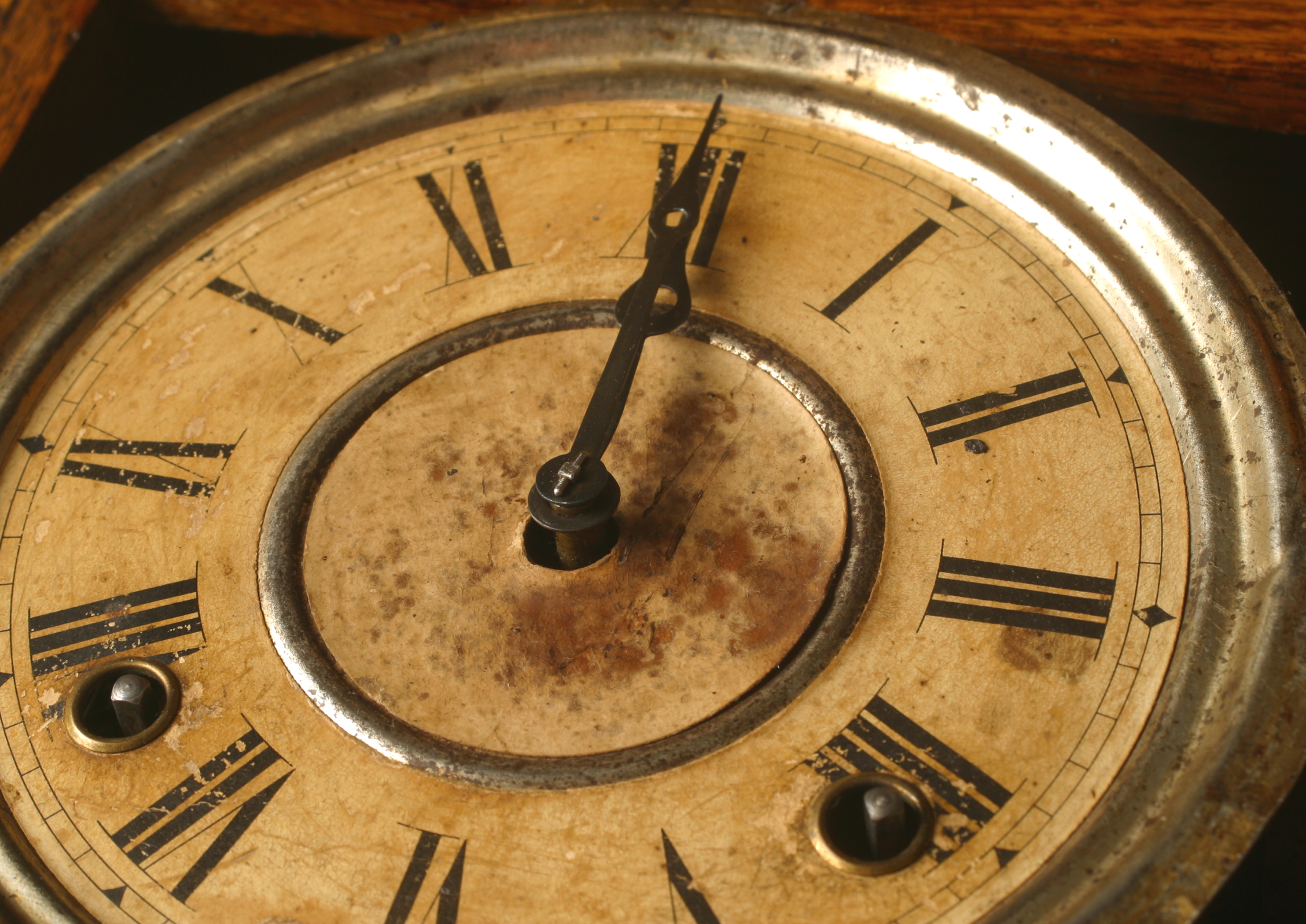
The "failing hands" referred to in the title to this post are those of the dead, said (somewhat unreasonably) by the poet who wrote In Flanders Field to throw the torch, meant to represent their quarrel with the foe, to those others who will replace them in the fight.  I venture to say that the dead have no hands, and that if they can be said to have them they are not failing but have failed entirely.  "Failing" is nevertheless something age can cause hands, and other parts of the body, to do, and "hands" may mean the hands of a clock as well as those of a man, and a clock measures time as it passes and as time passes we age. 

Aging is a curious thing.  It's association with time in the form of clocks is interesting and suggestive.  Clocks run down, and so do we.  Time passes, and we, eventually, pass away.  Why do we age, with time?  Why does age bring with it the successive decrease of strength and vitality and the increase in weakness and vulnerability?  Time's arrow wounds us and that wound is ultimately fatal.

It's disturbing and has disturbed many throughout--yes, I'm afraid--time.  Some it disturbs mightily.  Hemingway, it seems, despaired of life in part because he was unable to enjoy what he felt was good in it.  In his case that apparently included the ritualistic killing of bulls and causing the deaths of various fish and animals.  Be that as it may, though, he could no longer take his part in what was good as he had in the past and this exacerbated his depression and alcoholism and the possible bipolar disorder which ran in his family.

Others have even rejoiced in it, though.  At least, they've purported to do so.  Those have typically been convinced that life is bad in some sense, or a mere sojourn; a temporary and painful journey required for entry into a sublime state beyond the body.  Yeats compared an old man to a tattered coat on a stick, claiming by implication that is all an old man is, unless "soul claps it hands and sings and louder sings, for every tatter in its mortal dress."  I quote that from memory and may be wrong, but it's a wonderful line in a wonderful poem, and seems apt for those who think of life as, ultimately, a burden.

According to Epictetus, we are little souls carrying around corpses.  Another striking phrase.  Stoics as well as some Christians, and others, have thought that our lives as mortals are insignificant in the end.  This makes sense as the Stoics thought that what was divine in us is not our bodies, but the soul which partakes in the divine and is a part of it.  However, the Stoics could not hate the body or our lives as I think Christian zealots did and still do.  The divine was a part of the universe to them, a part of all that lives in the universe as well.  When the body dies and dissolves, that which is divine in us remains as part of the living universe.

What is simply is.  We age, and as Epictetus also said we should do at all times, we continue to do the best that we can with what is in our power and take the rest of what time and age bring as it happens.


Monday, September 22, 2014

Regarding Senescence

Both Cicero and Seneca, and no doubt other wise and good people, wrote of old age.  They did so to extol it; to tell those of us who are not as wise as they were that our disaffection with it is unwise and unneeded.  As I race (or so it seems) into my twilight years (well, late afternoon years, perhaps) I'm inclined to wonder just how much of such reflection is wisdom and how much of it is wishful thinking.

I don't doubt their sincerity.  Perhaps I do doubt Seneca's sincerity, though, at least a bit.  Regardless, I ask myself if they were trying to persuade themselves if not others that the evidence of aging--which can't be spoken or written away and which is disturbing sometimes, at least--is also evidence of something else, something less apparently bad and even good.  This is not necessarily an easy task. 

It's not necessarily a Stoic task either.  Pierre Hadot and others have claimed that the ancients engaged in spiritual exercises and have made that case convincingly.  Marcus Aurelius' notes to himself are such; Epictetus' recommendations, called "negative visualization" in this latest resurgence of Stoicism, are others.  Imagine the worst and what is the case or will be the case may be tolerated with equanimity (the anxious have always been Stoics, perhaps--something of a surprise).  But extolling age, if that is a practice, is of a different kind.  Were these two sages engaged in "positive thinking"?

The fact is that aging is a kind of progressive failure of the body and its little helper, or guiding spirit, or prisoner depending on your point of view, the mind.  There isn't much in that to celebrate when you think of it, unless you have a soul inclined to clap its wings and sing and louder sing for every tatter in its mortal dress as I think Yeats' poem says.  That singing presumes a life after death which somehow turns out to be much better than the one that ends in death, and many think that improbable.  I'm not certain what I think, and not for the first time.

As I contemplate with a sense of resignation if not delight the degradation of what physical and mental powers I possess, I think of Warren Zevon's song invitingly titled My Shit's Fucked Up.  The singer goes to a doctor as he's feeling kind of rough and is told that his shit's fucked up.  He tells the doctor he doesn't see how, and the doctor replies that the shit that used to work won't work now.  It's a kind of anthem of the aging sung in a mournful tune that is unmistakably Zevonesque. 

And as I noted, this is certainly true.  Wherefore then is old age the crown of life as Cicero called it?  An increasingly heavy crown, it seems.

Continuing with the popular music theme, which has somehow replaced that which was evoked by the mention of Cicero and Seneca, another view of old age or at least older age is given by Steely Dan in the song Janey Runaway.  In that song an older, well-heeled man, tells of the new lease on life he experiences taking up with a young woman who ran away from home.  It's a kind of anthem to lechery, the fantasy of an older man.  But alas, although the libido doesn't seem to decrease for us aging males the opportunities to indulge it sadly do, at least if one is not rich and living Gramercy Park.

Fantasies and mourning aside, how does a Stoic pass this time as time so indifferently passes him by?  By realistically acknowledging it and accepting it, I think, neither bemoaning it nor extolling it.  It's one of the many things beyond our control (for now, at least; perhaps soon we'll find a way to control it).  As such, it shouldn't disturb us or worry us.  It's simply life and we do the best we can with what we have and take the rest as it happens.

Sunday, July 6, 2014

The Rime of the Ancient Barrister

It is an ancient Barrister
And he stoppeth for to pee
As he doth do so often
With increasing urgency

The tavern's door is open wide
The bartender he beckons
The Barrister he steps inside
And quickly orders seconds

The Barrister has downed his drink
"There was a boy" quoth he
"Who read too much for his own good
And with celerity

He thought that being clever would
Impress all those he met
But found he did no more in life
Than make a palimpsest

The first draft was a tragedy
Though one of his own making
In giving he was too inept
But too adept at taking

The end it came and such an end
It was that he went mad
For many years he sought sucrease
But 'twas not to be had

And then in time he learned that
It was pointless so to grieve
And so he vowed to venture on
Another kind of screed

Behold, he did and it is well
But he is doomed to wander
In and out of tavern doors
And while he drinks to ponder

He is obliged to tell his tale
To barkeeps who don't care
And they all smile and pour his drinks
And wish he wasn't there

A sadder and a wiser man
No bartenders may see
No albatross about his neck
Is hung, nor should one be

No spectral voices to recite
The misdeeds of his life
As to a Hermit, there is none
To shrive him of his plight

No Wedding Guest for him to grab
And bore him with his woe
But he's content to tell himself
Exactly where to go.

I had forgotten what a stupid and annoying poem The Rime of the Ancient Mariner is, almost.  What was Coleridge thinking?  What, indeed, was one or another of my forgotten teachers thinking when compelling me and others to peruse this dreadful sing-song, this epic bit of portentous fluff?  There's no art involved in it, the rhyming is easy and uninspired and the story it tells is unremarkable.  But it's easy to parody, and I do so here as a most ominous birthday approaches; one of those birthdays which reminds those who "celebrate" it that there are fewer years left than those that have passed.

I am not the man I used to be.  I don't refer merely to problems of the prostrate and other physical failings though judging from commercials that is all that truly concerns those males of my age.  Erectile dysfunction, the need to urinate and troubling leakage as Tony Siragusa so kindly reminds us; this is what life is made of now, it seems.  But I wonder also--am I less sharp?  Do occasional lapses in memory signal the onset of senility?  Sharpness is significant in these times, when there is no opportunity for thoughtfulness, or perhaps no occasion for it.  Neither is anyone the man he used to be, but there is a sense of weariness that comes with the observation, and resignation.

Go not far from the ship, says Epictetus, especially now.  Be ready for the captain's call.  Why?  What happens if the ship sails without me?  I'll die in port in that case; what does it matter?  But perhaps he refers to the spark of the divine the Stoics claimed is part of us all.  When we wander far from that when we're old, we become monsters like Tiberius was said to be while in his last years in Capri, desperately hoping to revive the aging flesh.   Better to be one of the sages standing in God's Holy Fire.

Well, I'm not called, yet, and will await the call patiently, but will see what there is to see and know what there is to know while I can.  That way we keep rewriting our lives and perhaps in doing so we achieve something though it may not be what we thought to achieve in the first draft and regret never achieving.  Quod scripsi, scripsi as Pilate said, or as someone wrote he said.  There's nothing to be done about the past we've written.  Perhaps what's yet to be written will even be something better.