Showing posts with label Aristophanes. Show all posts

Thursday, November 10, 2022

Living in Cloud Cuckoo Land


The Cloud Cuckoo Land I refer to in this post is that of Aristophanes, as depicted in his play The Birds.
It's not the one referred to in the recent novel bearing that title, nor is it the one referred to by assorted German philosophers.  The Germans once thought themselves the successors to the ancient Greeks, for reasons I don't understand, and perhaps still do, but I do not. 

Cloud Cuckoo Land as it has been referred to in more modern times is a place where absurdity reigns, or a fantasy land.  As pictured in Aristophanes' play, it is a kind of kingdom of birds, made by birds who are thought to be the real or original gods.  It's built by birds on the recommendation of a couple of men, who tell them (the birds) of their divinity.  

As might be expected, the play has been interpreted as intended to communicate this or that profound insight, and may well have been intended to do so.  The most obvious interpretation--that it is a comedy written by a great writer of comedies, intended to make people laugh--is thought too vulgar.  But Aristophanes could be quite vulgar when he wanted to be, and the ancients were, in fact, quite vulgar in various respects according to modern sensibilities.  

But Cloud Cuckoo Land may be an appropriate description of the world in which we live, at least as a synonym for absurdity.  The mid-term elections didn't pan out as it was supposed to according to  our ubiquitous media, pundits and politicians, and that may be because of a rejection of the lunatic rantings of Stercus Magnus (as I'll call him for purposes of this post) and his cohort of brown-nosing (if not yet brown-shirted) imbeciles.  That of course would not in itself be absurd, and may even be encouraging.  But, the world in which we live remains one in which people who have no business governing anything run for and even obtain public office; one in which money is deemed speech; one in which it's easier to obtain a deadly weapon than it is to obtain accurate information.  So the dismal failure to predict the outcome of the elections may merely be the result of stupidity instead of a sign of sensibility.  

All part of the Cloud Cuckoo Land we've built, not the birds.

We humans built our Cloud Cuckoo Land believing ourselves to be gods or to be made in God's image, or at least to be the most intelligent creature living on this woefully small and insignificant planet.  We needed nobody to tell us that's what we should do.  Perhaps that's what gods do.  Alas, our Cloud Cuckoo Land is a disaster.

But here's another interpretation of Aristophanes' play.  Perhaps the obvious was, or is, the message of the play.  Perhaps Aristophanes was quite serious. The birds' Cloud Cuckoo Land would be better than any city of humans.  Birds are worthier gods than we are.  In fact, any animal would be.  There is wisdom in the worship of animals engaged in by our ancestors.  Unlike us, animals aren't selfish, greedy, stupid or malicious.  They subsist, they merely are, and live according to nature--that's all they can do, in fact.  They have no pretensions, no dreams or nightmares to confound or confuse them.  They don't make war.  They're what we strive to be and cannot be, perfectly in mesh with the world (at least until we've remake it).



Monday, November 29, 2021

Brains in Vats and the Untrammeled Mind


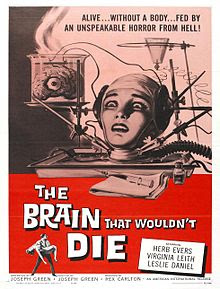
Not a brain, but a brain in a vat.  That's what won't die, at least in that part of the world (if there is one!) inhabited by philosophers.  "An unspeakable horror from hell!"  Indeed.

It's difficult to imagine a less serviceable avenue of thought than that indulged in by many philosophers for many centuries, relentlessly wondering if there is what is suggestively referred to as an "external world" and, if so, if it can be known by us. Worse, though, is their shameless tendency to write on the subject, if indeed it can be called one.  The consideration of the "question" is singularly purposeless, not merely because it's incapable of resolution, not indeed merely because it's questionable there is a "question" to be addressed, but because its consideration along with any possible resolution makes no difference to us, or to our lives.

It can't be disputed that we always act as if there is an "external world" and for the most part that our belief in it and its characteristics is substantially justified.  Anyone who seriously questions it could be accused of deliberately and thoughtlessly disregarding his purported belief.  Such a person would have to be mentally ill--"There is no world, but I live in it" isn't a statement most would make, and if one would make it seriously one would be treated, justly, as not quite sane.  That is what's done by philosophers who chew on this old chestnut and do so verbally and in print, to the amazement and bewilderment of those who listen to them or read their words (assuming, of course, that they exist).

What's particularly curious about this fixation with our claimed ignorance is that it's sometimes asserted that our incapacity is established by "scientific evidence."  There is of course the problem that it's questionable whether there can be any evidence, scientific or otherwise, if we can't know the "external world."  But it would seem obvious that the scientific evidence indicates that we evolved over time through our interaction with the rest of the world and interact with it consistent with our expectations time and time again.  If the results of experiments are "scientific evidence" it's apparent that scientific evidence in support of the existence of an "external world" is overwhelming.

Why, then, is this fantastic subject one of continuing interest and effort?  Let's ask, following Cicero:  Qui bono fuisset?  Where we humans are concerned, it's always important to consider who benefits from a particular act, question or issue.  Benefit--ours in particular--is always uppermost in our minds.

Who would benefit from a belief that we can't know the world, that we're separate from it, that it isn't real, or less than real; isn't true or less than true?

Those who thrive on it, clearly.  Philosophers, of course, do so.  For some it's their bread and butter.  Most if not all of the religious, as well.  "My kingdom is not of this world"--so said Jesus or so said someone who said Jesus said it.  The clergy in particular.  What would they do if people didn't think there was a world beyond this one; a world better than this one, which is the "real world"?

Anyone who benefits from disregard of or disparagement of the world as it is conceivably gains from the perception that there's something fundamentally wrong with things, so we may have to include politicians and pundits as well among those who claim the world isn't as it appears to us.  

No wonder that Plato, who first wrote extensively of a reality not of this world, was a totalitarian at heart.  If the world isn't real, then clearly we should seek what is real.  If we can't, we should be made to do so, for our own good.

And so we see what metaphysics and epistemology can lead to, if untrammeled by the world!  Without weights or guide lines, they ascend uncontrolled into the air like the balloon of the Wizard of Oz, they render us inhabitants of that city in the sky, Cloud Cuckoo Land of Aristophanes.  No wonder, perhaps, that Heidegger was a Nazi.  
 

Friday, June 4, 2021

The Fate of Satire


Reference to a dictionary will reveal that "satire" is, broadly speaking, a work using humor in such forms as irony and exaggeration to ridicule the vices and stupidity of individuals or entities.  So defined, satire has been around for thousands of years.  In the West, when ancient satirists are considered mention is normally made of Aristophanes among the Greeks, Juvenal, Petronius and Lucian among the Romans.  Martial as well, perhaps, though his satire was far more condensed being in the form of epigrams.  Seneca too, among the Romans, at least for his ridicule of the Emperor Claudius, applying for membership in the fellowship of the gods after his death. There have been many other satirists throughout history--Rabelais, Voltaire, Cervantes, Swift and Poe, for example, are some of the more famous of the lot. 

Satire is generally thought of as a kind of literature, and those named just above are of course writers.  Sometimes, though, drawings and paintings are satirical, like the print by Gillray at the top of this post, called The Plumb Pudding in Danger.  The plumb pudding is, obviously, the world and it's being carved up by William Pitt, Prime Minister of England, and Napoleon, who had by then become Emperor of France.

The quality of satires varies considerably.  So does the kind of humor or style of writing employed by the satirist.  Aristophanes' humor was somewhat farcical, as in his lampooning of Socrates and his circle The Clouds.  Lucian also targeted philosophers and philosophy, as well as other people and things, and was a mocker.  Juvenal's humor was dark and sharp; he had no light touch (I think of his satires as more in the way of rants).  Seneca's satire on Claudius struck me as more cruel than witty.  Rabelais seems to have made use of absurdity in Gargantua and Pantagruel.  Petronius' humor was deadpan, in my opinion.  His Trimalchio is unquestionably vulgar and pompous, but Petronius makes this evident merely by describing his statements and conduct, rather than commenting on them.  Irony seems to have been Swift's weapon of choice.

In these dark times, there's a concern by some that wit and humor, which would include satire, are being restricted if not entirely eliminated by the tendency of some others to condemn those who use them in referring to certain people or groups of people who are perceived as being or having been treated unjustly because of their difference from what's considered normal.  The most recent example that comes to my mind relates to the character Apu in The Simpsons and the apology made by Hank Azaria (his "voice") for his contribution in the stereotypical (though intended to be humorous) depiction of the character running a convenience storeThe apology caused John Cleese, formerly of Monty Python, to apologize for mocking white people as part of that group.

Cleese's point is fairly obvious, I think--that humor, and satire, are used in reference to all people indiscriminately, and should be.  In other words, that no one should be exempt from mockery merely by virtue of what they are.

That makes a certain sense, as does a related claim being made in these dark times--that nobody should be discriminate against, and therefore treating certain people better than others because or their race or religion, for example, is wrong.  From that, of course, it follows (or so it's claimed) that white, Christian people are being discriminated against when others are given certain advantages or benefits, or are deemed to have special claims to be satisfied.

In order for that position to accepted as appropriate, however, it's necessary to assume that we all are in the same position when it comes to treatment by each other, society and government.  If we existed on the fabled "level playing field" then a case can be made that favoring one group or person over another merely because they have a certain skin color or religion or other characteristics would be unjust.  That playing field doesn't exist, however, and never has existed.  To pretend that it does for purposes of complaining about discrimination against currently privileged people is fatuous, and indeed unworthy.  

When we insist that we should treating each other as if we all existed on a level playing field, we acknowledge that it would be desirable that we should live on that level playing field.  If we acknowledge that, though, we have to admit that we don't at this time, at least if we're honest.  So, one would think it would also be desirable that levelling steps should be taken,  But that would mean that those underprivileged or discriminated against unjustly, here and now, be benefited more than those who are not. Unfortunately, that's not something the haves are normally willing to grant the have-nots, particularly if that would mean the haves would have less than they do now.

So, I don't think this is a viable position, even when it comes to humor.  Does that mean that humor, and satire, will inevitably disappear?  

I doubt it, unless we expect that the kind of totalitarian society envisioned by the notoriously humorless Plato and put into place by such as Stalin and Mao will be our future.  The great Roman satirists lived in Imperial Rome, not exactly a free society, and managed to thrive.  I don't think shaming of the kind being practiced now will significantly restrict our tendency to mock and ridicule each other.  As well expect that wars will end.  Perhaps the more egregious kind of ridicule will be reduced, which wouldn't be a bad thing.  Satire is best when it is witty and subtle, not blunt and obvious or offensive.  It will survive all the moralists of this time as it has in the past.


Monday, September 30, 2019

O Tempora, O Mores! Redux--Politics.

Well, there it is.  Article II, Section 4 of the Constitution of God's favorite country, the United States of America. And, mirabile dictu, this not altogether clear, but succinct, language of that remarkable document comes to the fore once again in relation to someone holding the office of president of this divinely favored land.

I say it is a wonder that it has done so given the especially degraded nature of our politics and the craven nature of our politicians.  Even for an "impeachment inquiry" to commence is remarkable at this stage.  I suppose nobody could have expected someone even as self-regarding as the president would so blatantly, and stupidly, ignore the implications of the Mueller report and seek the support of a foreign government in an election in such a blithe manner.  But ignore it he did and so he has given heart to those who think his presence in the oval office a calamity, and caused alarm among his venal and submissive supporters.

And so begins a new phase of the farce.  Not even Aristophanes could have imagined this administration, and the advent of a diva president.  Still, narcissism, ignorance and other attributes so spectacularly on display likely are not treason, bribery, or "high crimes and misdemeanors" and so it would be unreasonable to expect that the president will be impeached merely for being himself.  What, then do they mean?

Treason and bribery are somewhat known; at least enough for most to dimly perceive when they seem to be taking place (although our Supreme Court has managed to conclude that bribery, at least when politicians and those who seek to influence them are involved,must be especially blatant).  But what in God's name are "high crimes and misdemeanors?"  Very few presidents have been impeached, but it seems that perjury is one of those things where they are concerned.  But other civil officers of the U.S. have been impeached (mostly federal judges) and what record there is suggests that high crimes and misdemeanors need not be crimes or misdemeanors, technically speaking, and may include abuse of office or malfeasance which do not necessarily amount to criminal conduct.

So it won't be necessary that the president be found by the House of Representatives to have committed a crime, presumably.  Yet it seems that not only the president's lackies--there is no other word which may be used as he cannot tolerate anyone around him who isn't servile--but also his enemies think that a serious crime must be established.  How else explain the view that an American  president seeking the assistance of foreign governments to harm Americans does nothing wrong?

It will be in any case be necessary that there be a trial by the Senate, and the Senators, or at least a majority of them, can be counted on to do only what is useful to them. As it seems that a majority of Senators are content to let the president do anything at all, short (perhaps) of murder or stealing money from them or their supporters, it's likely that if he is impeached by the House he will be acquitted, if that's the word, by the Senate.

Still, it promises to be quite a show, even though the actors are mostly dull, ponderous, sanctimonious, self-righteous, posturing blowhards incapable of wit.  We would be better served if members of the British Parliament were involved--they at least know how to speak and would not falter when called upon to utter long, complicated words as may be expected in such proceedings, and even to think on their feet.  Absent a teleprompter and a team of writers, it's anybody's guess what our politicians will blurt out at any given moment.

That it has come to this at last may, just may, indicate that there remains some self-respect and dignity in our politics and politicians, and some few, at least, who will when prompted behave as if they have principles and are unwilling to sanction the grosser efforts of the president and his supporters to feather their own nests.

There are disturbing times, when there is no honor even among thieves, and even less among those who purport to govern us.


Sunday, April 14, 2019

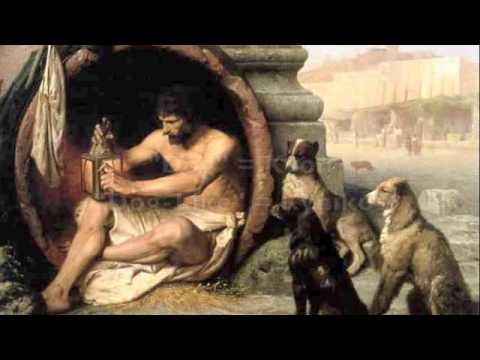
Diogenes the Dog


As the seemingly endless season of farce we call the presidential election begins, I think of Diogenes the Cynic.  I suppose I also think of Aristophanes, as he wrote farces aplenty and so would recognize one when he sees it, though he might, for a moment, be puzzled at the numbing length of this one in particular.  But Diogenes comes to mind primarily simply because he knew what a farce human life was then and mocked it incessantly, mocking even that high priest of the farce, Plato.

They say Diogenes walked about Athens with a lantern, looking for an honest man.  I've also read that he said he was looking for a human.  If that's so, I think he knew what Plato and others thought we were--truly homo sapiens, or that we could and should be wise--and set about looking for what such people thought we were in their foolishness, and of course found no such thing.

A farce our lives were, certainly, but just as certainly still are if we are what we seem to be; the same creatures we were in the time of Diogenes and no doubt were even before then.  It's hard to defend us and if we were put on trial I doubt we could find a lawyer willing to appear at our side...unless his/her doubtlessly high fee was prepaid, always a wise precaution when presented with a losing case.  We haven't changed.

We remain as greedy, superstitious, stupid, gullible, fearful and hateful as we ever were, as we always have been I suspect.  We may not sacrifice to the gods as we did, we may not worship the bones of saints as much, we may not en masse rely on chants and various plants to live healthy lives to the extent we have, we may not ignore the consequences of our actions quite as much as we did once upon a time, but we do it still to a significant degree, and there's no reason to think we'll stop until we've either eliminated ourselves or reduced ourselves to the point where we may start the same process all over again on an Earth less threatened by us than it is now.

There are many stories about Diogenes.  It's said he lived in a barrel, masturbated openly, ridiculed Plato and other worthies, flaunted conventions of all kinds, remarked that in the home of a rich man there's no place to spit but in his face.  Looking about him today he would still see no humans using even the most powerful flashlight available, let alone an honest man.  He would see the same he saw each day of his life and know now if he did not know then that we're unchangeable, and merely better equipped now than we were then to sate ourselves or wreck havoc depending on our moods and means.

The Earth is still no place for the man who called himself a citizen of the world.  In fact, especially here in this country, we are less and less inclined to think of ourselves as similar to any other people or as united in interest with them; certainly not equal to them, but altogether better than others, unique, the favored of God.  Just as the ancient Greeks believed they were, but sadly we're unable to produce men like Diogenes as they did.