Showing posts with label John Steinbeck. Show all posts

Tuesday, March 19, 2024

About the Great American Novel


The Atlantic recently published a list of 136 books under the title The Great American Novels: 136 books that made America think.  It focused on books published in the last 100 years.  I thought it somewhat disappointing.  I thought it puzzling.  

I'm disappointed by the fact that I must admit that I've only read 7 of the 136 "Great American Novels."  It's true that as I've grown older, I've become less inclined to read novels, except as a means of escape from these dark times.  A novel need not be great to provide such escape.  I'm puzzled because it seems that these "Great American Novels" according to the magazine itself are not Great American Novels as I conceive them to be.  

Clearly, as I haven't read most of the novels on the list, I may be unqualified to opine on whether they're great, or American, or either or both.  But the problem I have arises from the way in which they're characterized by The Atlantic as "Great American Novels."  They're described as novels that made America think.  In what sense does that make them "Great American Novels"?

I think it's probable that there are and have been novels that "made America think" that aren't about America or Americans, and were not written by Americans.  Shouldn't they be "Great American Novels" as well, given such a definition?  Is War and Peace a Great American Novel?  Something by Proust? If not, why not?

Wouldn't the definition of a "Great American Novel" make more sense if it comported more directly with the qualifying word "American"?  Obviously, a novel may be great and have nothing to do with America or Americans or be written by an American. 

I assume that the authors of the books on the list are all Americans.  Is the fact that a great novel is written by an American sufficient to make it a "Great American Novel"?   Why wouldn't it be instead a great novel written by an American?   In what sense are A Wizard of Earthsea and The Dispossessed  Great American Novels, if not for the fact that they were written by Ursula Le Guin and Octavia Butler, both Americans?  The stories told in each don't even take place on Earth.  Is it claimed that they deal with themes that are uniquely American?  How do we determine what those are in the first place?

Huckleberry Finn, referred to by Hemingway as the source of modern American fiction in the quote above, is easily identifiable as an American novel.  It was written by an American, the story told takes place in America and it deals with what is unquestionably a uniquely American subject matter.  The same can be said of John Steinbeck's The Grapes of Wrath and other novels, each arguably "great."

If we are to speak of Great American Novels, it would seem to make far more sense to define them as those involving America, which take place in America, deal with themes identifiably if not exclusively American and are written by Americans.  To define them as those novels which made America think seems not to define them at all in any useful sense, unless Americans think differently than others do and about things others don't think of, which strikes me as a difficult claim to make.

Sunday, January 7, 2018

Alas, Alas Babylon!


One thing that can be said of the Bible is that it has provided titles to authors of books, particularly (and appropriately?) books of fiction.  The Bible is known to most of the West fairly well, as it was hammered into us by various and sundry adults we were exposed to as children.  It was the source of titles for William Faulkner,  John Steinbeck and Earnest Hemingway, and for Pat Frank who wrote a book entitled Alas, Babylon, which I read with considerable interest as a teenager.  I remember it fairly well, which is more than can be said of other books I read, whether under the compulsion of a teacher or freely.

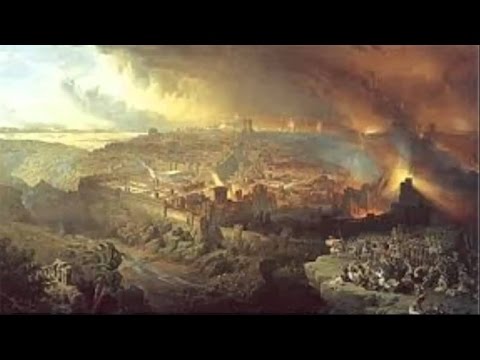
The title of that book, and of this post, is taken from the cheery Book of Revelation, the favorite of so many of us Americans, who tend to associate Babylon, the great whore, with New York or perhaps Hollywood.  It seems likely the actual author (or authors) of the Book meant to refer to Rome, but Americans and others like to associate America or parts of it to ancient Rome or the Roman Empire, so maybe it makes no difference.

The book of Frank Pat or the Book of Revelation comes to mind as I observe the antics of our self-described stable genius and inadvertently amusing president and the ruler of North Korea as they revile one another, as Frank's novel was devoted to the describing of the results of a nuclear war on survivors in Florida.  They themselves bring to mind, to my mind at least, the Elvis Costello song Two Little Hitlers.  But comparing the president with Hitler, even to a little Hitler, is as tiresome as the president himself.

Sin and punishment of and for sin are of course the essence of the Book of Revelation and of the Bible itself.  They're also essential to any religion, and I think ethics, founded on the belief that right and wrong are determined by following or failing to follow divine commands.  Follow those commands and one acts rightly; fail to follow those commands and one acts wrongly.  As the commands are those of God, the failure to follow them must result in punishment of a particularly vicious  kind, and as what happens to wrongdoers in life is often thought to be insufficiently vicious, that punishment must come in the afterlife.  Naturally, if God decides to intervene in life, the punishment will be adequate, and in order to be adequate that punishment must be as mighty as possible, and nuclear punishment is as mighty as we can conceive at this point in our sad development.

An ethics or religion based on divine command strikes me as unsatisfactory, but I can understand the impulse to believe that our conduct presages some kind of disaster if it does not merit some kind of devastating punishment.  It's difficult not to think that bad things are bound to happen, and soon.  "Dangerous creeps are everywhere" as Warren Zevon and Hunter Thompson wrote.  We have cause to be afraid.

So it seems, in any case.  I take some comfort in the fact that it's possible we perceive ourselves to be in greater peril than in the past simply by virtue of the fact that information, good or bad, true or false, is so much more available to us than in the past, and instantaneously.  Perhaps we've always been this way and our nation and society has always been in this condition, but we were better able to cope with it, or at least ignore it, in the past merely because it wasn't there before us at all times, as it is now.

But an aspiring Stoic should be undisturbed by all of this, as it is beyond the power of our will.  Our business is to govern ourselves to do what is right, and treat what we cannot govern as indifferent.  A Stoic, and even an aspiring one, should be able to survive even our time without being disturbed.