Showing posts with label Nature. Show all posts

Sunday, November 26, 2017

Selfishess, Salvation and the Supernatural


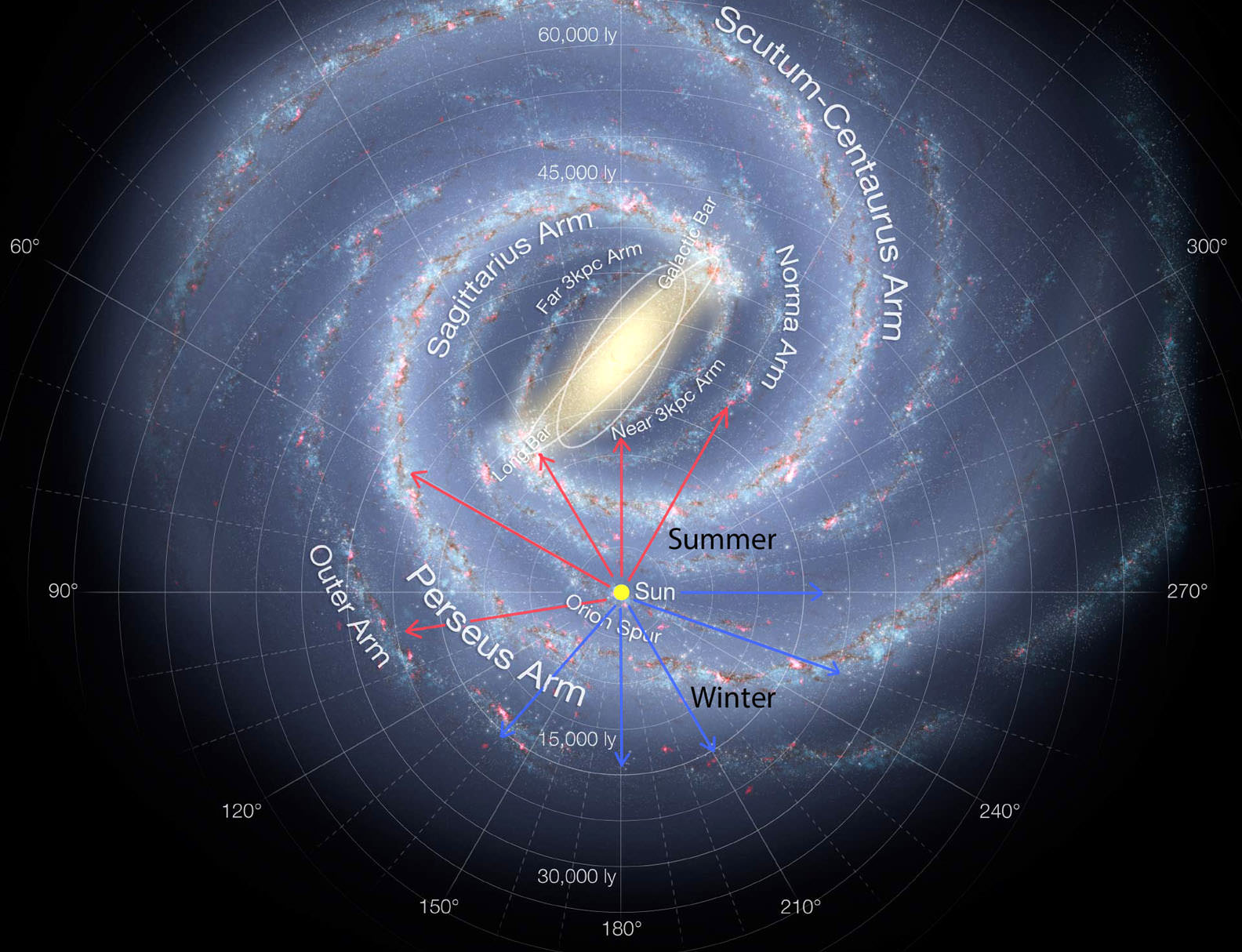
The Milky Way, the galaxy of which our world is but a tiny part, is itself only a tiny part of the unimaginably vast universe in which we and all we know exist.  Why do some of us insist there is "more"?

There is certainly more than we know, of course.  We know only a very little of the universe.  What I wonder, though, is why some of us believe there is more than the universe--by which I mean more than nature, i.e. the supernatural.

That very odd man, Cardinal Newman, in his Apologia, I think, wrote that he felt from an early age that the real world we know isn't "really real" but that there was something else lurking behind it, as it were.  I find this view as odd as the man himself, even odder.  What we insist on calling "supernatural" seems to me to be very much like what we know in nature made or perceived as strange.  Ghosts, for example, are eerie figures which were people and so resemble people or are people but in an unusual form.  The transcendent God many believe is, apparently, the perfect form or creator of all that we creatures of nature find admirable; but what we find admirable we admire because we know or believe it to be so naturally--we encounter or experience it within nature.

It strikes me that what we believe to be supernatural is more easily conceived of as being part of nature, of the universe that is, but part of it that we don't yet know or understand.  People ignorant of quantum physics too often refer to it as somehow establishing something or other.  I'm certainly ignorant of it myself, but what little I read and comprehend of it seems bewildering enough to indicate that we have much more to learn about the universe.  With so much more to learn, why do we purport to envision anything beyond it?  How can we even guess what that might be?

I would guess that belief in the supernatural results from a dissatisfaction with the natural.  That dissatisfaction can only be one arising from a very narrow point of view of nature.  This is necessarily the case because it must arise from the perspective of a dissatisfied person.

There's certainly enough to be  dissatisfied with, of course.  It's likely that's always been the case, and likely as well that there was even more to be dissatisfied about in the past.  But the fact remains that nature dissatisfies because our perspective of it is ultimately a selfish and, relatively speaking, small one.  The supernatural being unnatural or a-natural doesn't disappoint or rather can't disappoint because it isn't real and may be anything we want it to be.

Dissatisfaction with the world is necessarily selfish, and so it isn't surprising that satisfaction with the supernatural--that which isn't part of the world and so cannot be attained until we're not part of the world--is selfish as well.   In other words, the afterworld or otherworld where we go when we're out of nature is hoped to be what we would be satisfied with, unlike the world in which we now live.   We're thought to attain this desirable afterworld if we're worthy; if we're saved.  The reward for salvation is in that sense intensely selfish as well.  We are saved.  Others may be if they are saved; or they may not be.

So it seems to me, in any case, as part of this speculation or train of thought. 

This emphasis on the supernatural, on the transcendent, is therefore an exceedingly personal one.  Which to me raises the question whether it is truly moral. 

Concern for the welfare of others is a concern which is properly directed towards living in nature.  Concern for their "immortal souls" is a concern with the supernatural.  Perhaps that's why we've always been less concerned with the lives of others than we purport to be or than we say we should be. 

It isn't surprising that those who refuse to cherish nature believing it to be secondary and who maintain that we're apart from nature rather than a part of it should be supremely selfish, because the world and all that is in it is essentially not their concern.  It cannot be, not "really."  We suffer from a disregard of the universe though we barely comprehend it.  Our belief in transcendence dooms us to disconnection with the world and others.

Sunday, October 17, 2010

Some Thoughts Regarding "Natural Law"

I'm reading a book called Marcus Aurelius and the Later Stoics by F.W. Bussell, one of the many books which are freely available through, and which I freely download on, my nook, and a sentence of his to the effect that theology without anthropomorphism is Natural Law, "got me thinking" as we like to say.

As far as I'm concerned, the fact that so many of the religions we've dreamt up during our relatively short time on earth ascribe very human traits, and even sometimes forms, to a deity creates problems for their credibility.  Among these problems are those associated with the idea that a supreme being came to live among us, and those which assume that such a being finds peculiarly human conduct or misconduct of great and indeed paramount interest.  For example, for me at least, it's difficult to believe that God is very troubled if we have sex out of wedlock, and even more difficult to believe that he punishes those who do eternally.

"Natural Law" can mean different things, in ethics and in law.  But one of the things about stoicism I find interesting is that it considers human nature, and nature generally, in coming to certain conclusions regarding good conduct and the good life.  In coming to these conclusions, it doesn't necessarily rely on the existence of a transcendent and bafflingly human God functioning as law-giver, although it does maintain that there exists as a part of nature a kind of Divine Spirit or Reason in which we as humans share.  Bussell (and others I've read) seems to feel that the later stoics began to think of this Spirit, or Reason, or Logos as transcendent and personal, and I know that Epictetus, for example, would sometimes refer to it in a personal manner (i.e. as if it were something like a person); but I'm not so sure.

Be that as it may, I'm personally sympathetic to the view that we humans generally share certain characteristics which can be identified and described through the use of our intelligence, just as the rest of nature has characteristics which can be identified and described through the use of that capacity.  If that's the case, it would seem to be possible to use that information in making certain reasonable inferences regarding good conduct and the good life, based on what most of us find desirable (there will always be people who want or at least will profess to want to kill and torture other people, or who are insane, but I don't think their existence precludes us from making such inferences any more than "freaks of nature" or highly unlikely but still possible results prevents us from coming to scientific conclusions as to probable outcomes).

Such inferences could result in certain non-absolute rules, and to the extent that they are based on human nature and the place of humans within nature might be considered something like Natural Law.   Unlike Natural Laws, however, those rules need not be conditioned on a belief that that they exist in some fashion separate from us, or are imposed by some transcendent higher power.  They cannot be separate from humanity or from nature as they are derived from both--from the intelligent consideration of humans as they interact with each other and their environment.

So, perhaps Natural Law theory if broadly defined can have a naturalistic basis, one independent of the need for God as traditionally conceived.

Thursday, December 17, 2009

The World is Too Much with Us?

I've always wondered about these words of Wordsworth.  How is the world "too much" with us?  Is it too much with us?  Or, too much with us?  And, "too much" implies the existence of some sort of standard by which "with us" or "with us" can be measured.  What is it?

Reading the poem, of course, gives one the impression that he is very simply and plainly complaining about us--we humans.  We get and spend, and lay waste our powers, whatever that may mean.  We see little in nature, or little in nature which is ours (nature is ours?  Or, there is little we see that is ours, in nature?)  And what's that about the sea baring her bosom to the moon?  Was it simply needed to rhyme, so sublimely, with "boon"?

That aside, he seems to be complaining about what we do to, or with, the world.  Imagine what he would write now, poor fellow.

I think there has always been in us a tendency to consider nature as something apart from humans.  Sometimes, the tendency is to romaticize nature, as something better than humans, or at least better without humans.  Sometimes, the tendency results in philosophers concluding that we cannot really know if there is an external world, or, if there is one, whether we can ever really know what it is like.  Sometimes, it results in the view that nature or the world, as something distinct from us, is something we can do with as we please.  In each case, I think, this tendency deludes us.

I tend to think, as I believe Dewey did, that we are not separate, at least not in any significant sense.  We're all there, with everything else; we're part and parcel, as it were, of "ordinary day to day life", interacting with other humans and creatures and things.  Nature, or the world, or the universe, includes humans.

One would think it a rather elementary inference from this that it is in our interest to act accordingly. i.e. to ascertain and anticipate how we interact with everything else, determine the results of that interaction, and analyze the benefits and costs of certain kinds of interaction, ultimately selecting those which result in benefits.  I don't think we can do so, intelligently, when viewing nature as an idyllic paradise we soil, or something distinct from us we cannot really know, or something which is ours to do with as we please.