A CICERONIAN LAWYER'S MUSINGS ON LAW, PHILOSOPHY, CURRENT AFFAIRS, LITERATURE, HISTORY AND LIVING LIFE SECUNDUM NATURAM
Monday, May 6, 2019
The Pathos of the Apologist
I read yesterday a book, apparently a classic of Christian Apologetics, entitled Your God is too Small: A Guide for Believers and Skeptics, by J.B. Phillips. It is an easy read. It leads me to ponder the pathos of the apologist. It seems to me that apologists, especially those who defend religion or, more generally, the belief in God, always disappoint when sincere.
It's better to disappoint than induce contempt or, at best, amusement. Dr. Strangelove was delightfully amusing in his defense of his plan to use mines to protect the rich and powerful from the Doomsday Machine and repopulate the world, or at least the American part of it. The religious apologist in defense of religion is never, never amusing. In my experience, though, the religious apologist is sad.
A lawyer is familiar enough with special pleading. In a sense, it is what lawyers do. So, I think I know it when I see it. I see it in Phillips' book, alas, and have seen it in the books of others like C.S. Lewis and Chesterton. I moves me to wonder why such books are written.
Phillips, in what I think is a fairly perfunctory fashion, first describes and criticizes views of God which he feels are "too small" and therefore out of place in the modern world (the book was written in 1952). He does so by the way of acknowledging, also I think in a perfunctory fashion, the problems with views held by certain, and it seems too many, Christians. God viewed as "resident policeman" for example. God as a revered, but very old and therefore old fashioned, gentleman. These and other views he claims very naturally lead modern men and women to think Christianity to be out of touch with modern reality, and especially the discoveries of modern science.
He also maintains, however, that those who think of the God of the immense universe as necessarily detached from we humans and our concerns also view God as "too small." According to Phillips, that's because we think God incapable of having a personal interest in us, something we shouldn't do of the Supreme Being. He claims those who think God impersonal think of God merely as a great and powerful human, a kind of "managing director" too busy with other matters to pay attention to us as he naturally does by virtue of what he really is, a Father.
Well, I don't think that works. I think it fairly evident that those who think God impersonal, at least in comparison with the exceedingly personal God of Christianity don't feel God is incapable of loving us in the manner we humans understand love because God is too busy. Instead, I think that they do so because such a God isn't human.
,
Be that as it may, having decried various views of God, even some Christian views, as "too small" Phillips then proceeds to tell us why only Christianity provides the means by which we escape the view of God as "too small."
He does so in a way I find interesting. To a certain extent, he uses C.S. Lewis' idea that Jesus must have been God because he said he was God. The argument is something like this: Jesus was not a lunatic; only a lunatic would say he was God if he wasn't God; Jesus said he was God; therefore, Jesus was God.
The logic of it aside, a problem with this view is that the only evidence Jesus said he was God appears in a Gospel written decades after his death, while the other Gospel's do not claim he said he was God. It's extremely likely that if he said he was God, this would be mentioned in the other Gospels. The fact it isn't makes one wonder if he ever said what the Gospel of John claims. In any case, one can't simply assume he ever said such a thing. It's not a very solid foundation for an argument.
In writing this Phillips is merely repeating the argument of Lewis, though. Most striking is his argument that (and now I paraphrase) if you really believe Jesus is God, you'll accept that he is God; you'll even know he's God in the sense that it will make perfect sense to you that he's God, and, well, that's as good as it gets when it comes to showing God exists.
There's other stuff in the book as well. That the God of the universe had to become human in order to show us the way, etc., and this reconciles the impersonal God with the personal God. Where do we get our conceptions of Beauty, Truth, Goodness than from God (well, I would say more than likely from interacting with the rest of the world and others than from somewhere or some being existing outside of time and space--whatever than means). I confess I grew impatient.
Again, why bother? I can understand that a believer would grow frustrated and angry at the assaults of the angry non-believers. I suppose it's natural to defend what you believe in. But I very much doubt that apologists convince anyone, and think that apologetics is simply "preaching to the choir." If the arguments I've seen are representative, they aren't persuasive. So, to believers and non-believers I say--believe, or don't believe, and be content, but most of all be silent. That's my guide to believers and skeptics.
Monday, April 22, 2019
The Good, the Bad and the Grubby
It's Spring at last here in the northern portions of God's favorite country, and in this time of rebirth what is called the Mueller Report has been born and must be borne, if only in its redacted form.
I have not read it. I read legal opinions, pleadings, reports even, being a lawyer, almost every day, and to read all of this particular report would be far too much like work. Some day I might, but I make no promises. I've read a bit of it, though, and of course have read and heard about it persistently since it was thrust upon us. We cannot escape the pontificating of the politicians and pundits, nor can we avoid the bleating of their enthralled and increasingly misinformed audiences.
The reaction of the tiresome inhabitant of the White House, his cronies and followers is unsurprising. What else would it be? Coarse jubilation, misstatement, misunderstanding and misrepresentation. It's likely that none of them understand just what collusion is or that collusion is not a legal term or act. It's likely also that collusion, the intentional, combined effort and intent to deceive for an illicit (not necessarily illegal) purpose took place and takes place daily in politics. That does not mean the law has been broken, though. It merely means that corruption exists and even thrives.
As for obstruction, judging from the language of the federal statutory law (I haven't read the case law), it would seem to me clear that attempted obstruction is against the law as much as actual obstruction, so I'm inclined to say the law was broken. I'm not all that surprised, though, that an indictment of a sitting president wasn't sought by the Special Counsel. Someone in his place might well avoid that decision and leave it to the DOJ or the Congress. The Attorney General has proved to be something of a toady. God only knows what the Congress will do.
What can be called "good" or "bad" in such a situation? The result of the report is not "good" I think, but it was never intended to be "good" or "bad." It's a report of the results of an investigation into the conduct of certain people. The investigation was to determine the extent to which Russia sought to influence the last presidential election and whether any U.S. citizens participated in that effort. That Russia did seek to influence it is clear, as is the fact that its efforts in this regard were extensive. Just how much it influenced the election isn't clear, but it's likely it had some impact. It was concluded there was not enough evidence to establish the existence of a criminal conspiracy, although it was concluded that the president's campaign was happy to use whatever those efforts were to its advantage.
The president's fragile ego is such that he cannot accept that the efforts of the Russians took place, let alone that it worked in favor of his election. But as far as we know his election is the first to follow a serious, well-planned effort by a foreign power--traditionally an enemy--to assure the election of a particular candidate, in this case himself. It's quite a distinction.
Legal considerations aside, no person that was the subject of the investigation comes out looking good, and to me at least many of them come out looking bad. Most of all, though, they come out looking grubby. A dictionary will tell us that "grubby" is defined as "dirty, grimy; worthy of contempt; base."
None of this seems to matter, though, to some of us; maybe most of us. Perhaps we have come to expect our leaders to be grubby, and tolerate their grubbiness provided they say what we want them to say, do what we want them to do. Perhaps we've grown so tired of the hypocrisy that characterizes politics that we find the openly grubby refreshing. Perhaps we've become grubby ourselves, or have accepted grubby ideals, grubby dreams.
April is the cruelest month, according to T.S. Eliot. There are grubs aplenty. Grubs of one kind in low places, grubs of another kind in high places.
Sunday, April 14, 2019
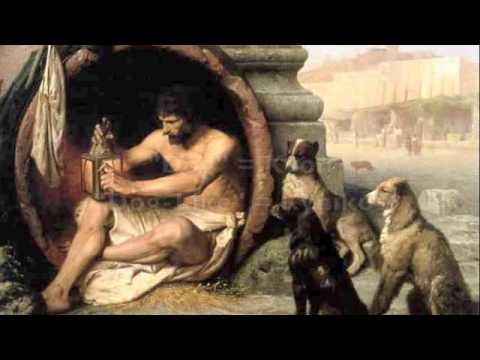
Diogenes the Dog
As the seemingly endless season of farce we call the presidential election begins, I think of Diogenes the Cynic. I suppose I also think of Aristophanes, as he wrote farces aplenty and so would recognize one when he sees it, though he might, for a moment, be puzzled at the numbing length of this one in particular. But Diogenes comes to mind primarily simply because he knew what a farce human life was then and mocked it incessantly, mocking even that high priest of the farce, Plato.
They say Diogenes walked about Athens with a lantern, looking for an honest man. I've also read that he said he was looking for a human. If that's so, I think he knew what Plato and others thought we were--truly homo sapiens, or that we could and should be wise--and set about looking for what such people thought we were in their foolishness, and of course found no such thing.
A farce our lives were, certainly, but just as certainly still are if we are what we seem to be; the same creatures we were in the time of Diogenes and no doubt were even before then. It's hard to defend us and if we were put on trial I doubt we could find a lawyer willing to appear at our side...unless his/her doubtlessly high fee was prepaid, always a wise precaution when presented with a losing case. We haven't changed.
We remain as greedy, superstitious, stupid, gullible, fearful and hateful as we ever were, as we always have been I suspect. We may not sacrifice to the gods as we did, we may not worship the bones of saints as much, we may not en masse rely on chants and various plants to live healthy lives to the extent we have, we may not ignore the consequences of our actions quite as much as we did once upon a time, but we do it still to a significant degree, and there's no reason to think we'll stop until we've either eliminated ourselves or reduced ourselves to the point where we may start the same process all over again on an Earth less threatened by us than it is now.
There are many stories about Diogenes. It's said he lived in a barrel, masturbated openly, ridiculed Plato and other worthies, flaunted conventions of all kinds, remarked that in the home of a rich man there's no place to spit but in his face. Looking about him today he would still see no humans using even the most powerful flashlight available, let alone an honest man. He would see the same he saw each day of his life and know now if he did not know then that we're unchangeable, and merely better equipped now than we were then to sate ourselves or wreck havoc depending on our moods and means.
The Earth is still no place for the man who called himself a citizen of the world. In fact, especially here in this country, we are less and less inclined to think of ourselves as similar to any other people or as united in interest with them; certainly not equal to them, but altogether better than others, unique, the favored of God. Just as the ancient Greeks believed they were, but sadly we're unable to produce men like Diogenes as they did.
Monday, April 8, 2019
What Comes After Disgust?
What prompts the question is the state of our nation. More particularly, the state of our nation's politics and politicians. More and more, day by day, sometimes hour by hour or minute by minute, it and they inspire nothing but disgust in me; loathing, even, that most extreme form of disgust. To be clear, I refer not only to the scatter-brained oaf inhabiting the White House and those who facilitate his caperings (and there are many Republicans, alas) but all those who participate in the corruption that overwhelms our governors and government.
I'll speak plainly. Politicians are by their nature liars. Perhaps it's more correct to say that politicians must be liars. In order to be a politician, one must dispense with honesty and honor as it's necessary to please those who have the wherewithal to maintain one's status as a politician, regardless of what they believe, think or do. The fortunate politician may accept the same beliefs, thoughts and acts, but in order to be successful at politics must placate more and more people, again regardless of what they believe, think or do. The politician has committed to the sale of his/her soul, assuming they have such a thing.
The U.S. is too often compared with ancient Rome, generally to late Republican Rome. That's an unfair comparison--to ancient Rome. Rome even as the Republic decayed produced men of honor and even genius--Cicero and Cato, for example. Who do we have to compare with them? We're fortunate if our politicians are able to speak coherently, let alone speak the truth. The Roman Republic was an oligarchy, of course, but in what sense are we better? Juvenal (I think) wrote that all things were possible in Rome if one has money, and that is the same here and now. But money is all that we honor and respect. It's no longer a tool, it's an end in itself. Our politicians aren't oligarchs, they're clients, in the Roman sense, and are bought and sold like slaves.
Assume, then, that politicians will lie when it suits them. What reason is there to believe anything they say? What reason is there to believe they will do anything if they say they will? One can make estimates as best one can based on the undoubted fact that they will do, as often as possible, what it is in their interest to do as politicians. So, they may be predictable as self-interested liars are, but though predictable remain, entirely, dishonorable and disgusting. A government of shills, of whores, in fact, though whores at least provide a service many think is desirable.
Accept that our politics and politicians inspire disgust. What, if anything, is next for them and for us?
Do we simply resign ourselves to disgust? Do we tell ourselves that we will abide with what is disgusting provided we are left alone with our disgust? Is cynicism (small "c") our default position? That's one option, certainly. But disgust can become anger and anger can become violent. What is disgusting can become too disgusting if left unchecked. Ultimately, we will become one of the disgusting or one of the disgusted.
Monday, April 1, 2019
Homage to Hunter S. Thompson
Otherwise, it seems to me that they wrote, and thought, much the same. The writing of both men was flamboyant in some senses, and yet could be succinct and sharp. Their personalities were different, Mencken being more or less conservative in his lifestyle, though drolly so, and Thompson being anything but that. But they were both iconoclasts, suspicious of authority, impatient with stupidity, and contemptuous of politics and politicians.
Just what drove Thompson to take his own life I cannot say. From what I read, he may have found himself surprised and overwhelmed by the fact he was aging and no longer capable of doing and enjoying what he used to do and enjoy, at least in some significant sense.
Thompson didn't write a great deal in his later years, but I'm enjoying reading his ruthless assessment of the Bush-Gore election and its principals, and of American politics in the early years of this century. I can't help but think that he would have roused himself to comment as mercilessly on the politics and circumstances of this our time, and suspect he would have been even less restrained now than he was throughout his career, though restraint was never a part of his character. He called America "The Kingdom of Fear" while he was alive, before our current encounter with and it seems acceptance of that combination of greed, fear, hatred, arrogance and ignorance which serves as the politics and culture of this sad time. What would he call America now?
He would call it something, and it would be something bad. Nasty, I would think, even as our nation has become nasty in a particularly vile way. It is impossible to respect someone or some group of people who are spiteful, especially where the spite is encouraged and manipulated by the well-heeled; when, in other words, the spite is at the direction of the rich. Their only purpose is generally to line their own pockets and/or those of their friends.
If there's one thing we could count on, it is that Thompson wouldn't merely criticize, he would horsewhip those who rule us and seek nothing more than to retain their rule over those they dupe, in writing. And it seems to me that there are none now willing or able to do such a thing. Perhaps that's what must be done if one is to be noticed.
Most important of all, though, is that the criticism be not merely scathing but intelligent. We live in a world where almost everyone has or can easily enough obtain an audience of like-minded associates, and many believe that they don't need intelligence, or wit, or knowledge to ponitificate. Most any can make use of the World Wide Web or social media to say something, and they will do so, however ineptly, and will be listened to at least by some. Mere spouting of ideas, such as they are, would make little impression among all the noise. Faux outrage and anger are so common as to make no impression on those who listen to talk radio.
It would take something special to be noticed, and what is more special today than the ability to write or speak clearly and well? Thompson could have done this. I'm not sure anyone else can.
Subscribe to:
Posts (Atom)